There is a useful distinction in the AI conversation that often gets blurred: AI workflows and AI agents are not the same thing.
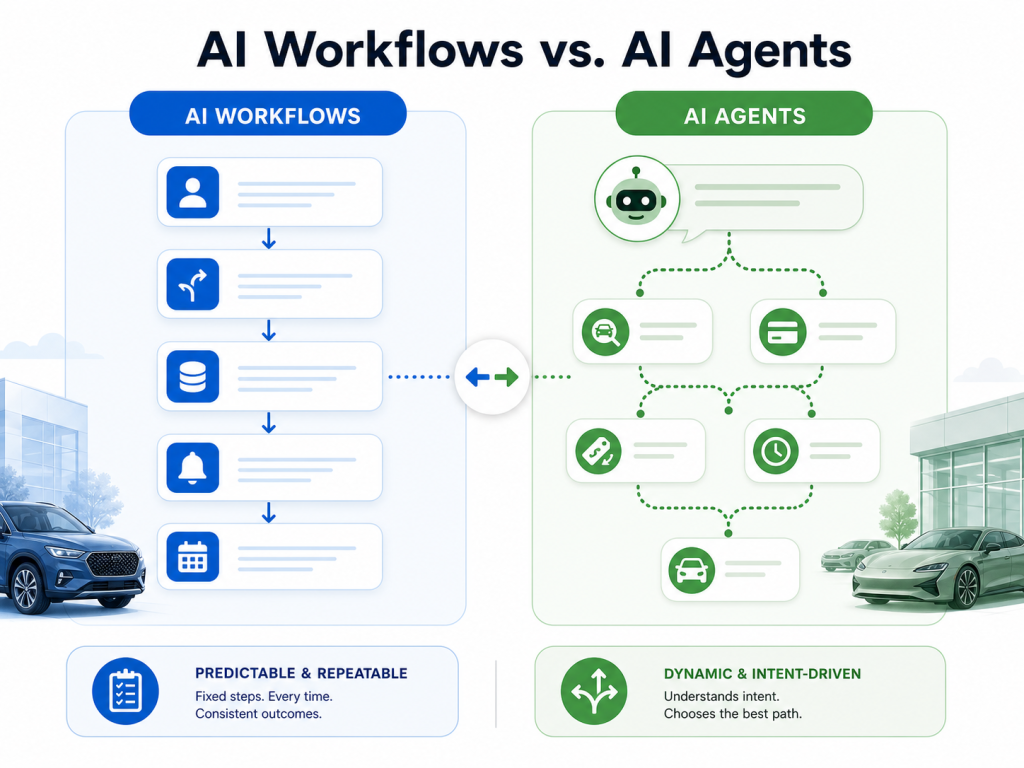
Both can use large language models. Both can call tools. Both can automate work. But they solve different kinds of problems. Anthropic describes workflows as systems where LLMs and tools are orchestrated through predefined code paths. Agents, by contrast, are systems where the model dynamically directs its own process and tool use. Redis frames the difference with a practical test: if you can draw the flowchart before the model runs, a workflow is usually the better fit. If the flowchart depends on what the system discovers at runtime, an agent starts to make sense.
That distinction matters in production systems, especially in industries like automotive retail where reliability, auditability, and customer experience all matter at once.
Start with the simplest useful system
One of the clearest recommendations from Anthropic’s guide, Building effective agents, is to start simple and only add agentic complexity when it is warranted. That is an important counterweight to the current excitement around agents. More autonomy is not automatically better. It can increase cost, latency, testing difficulty, and operational risk. In many cases, a structured workflow is easier to reason about, easier to monitor, and easier to trust. Redis makes a similar point in AI Agents vs Workflows: When to Use Each: workflows win when the path is known before execution starts. Agents win when flexibility matters more than predictability. The practical answer is not “agents everywhere.” It is knowing where autonomy creates value.
Where AI workflows fit in automotive retail
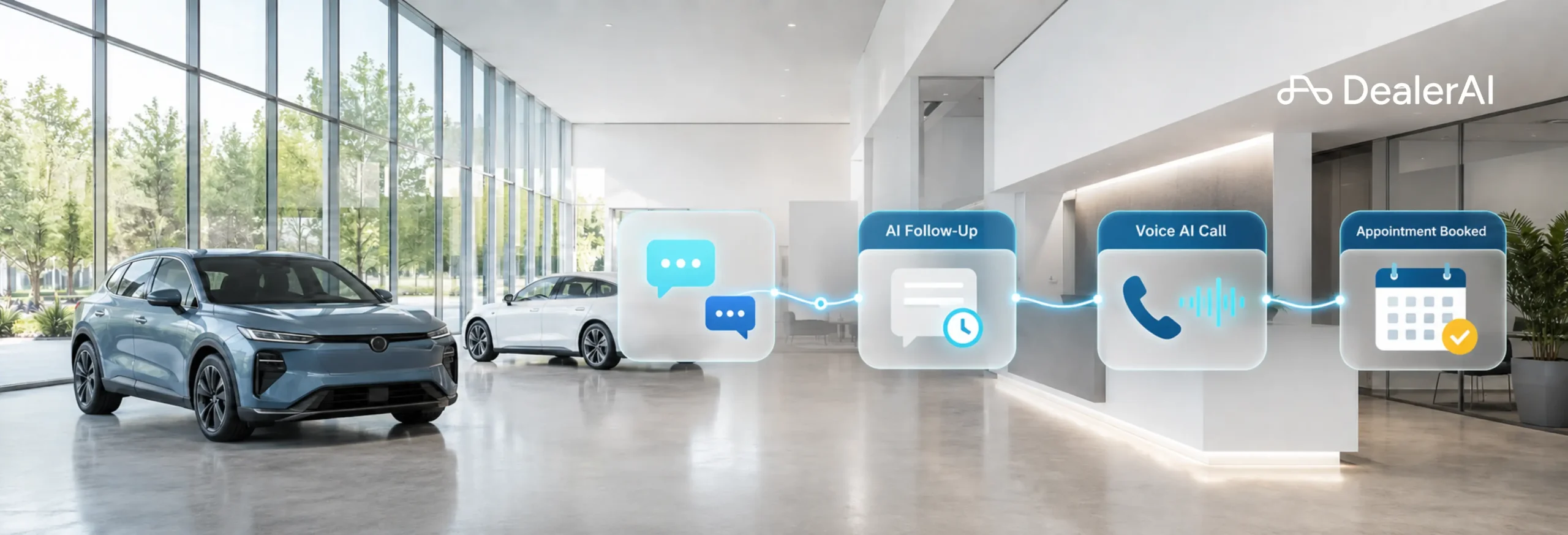
Some dealership operations should be predictable by design. When a lead comes in, it needs to be captured, normalized, routed, logged, followed up, and synced into the dealership’s systems. When a customer books, cancels, or reschedules an appointment, downstream CRM and operational events need to happen consistently. When a sequence message is scheduled, the timing and state transitions should be auditable. These are workflow problems. They benefit from structure:
- Known inputs and outputs
- Controlled steps
- Repeatable integrations
- Easier testing and debugging
- Predictable cost and latency
- Clear audit trails
In DealerAI, this kind of workflow thinking applies to areas like ADF lead processing, scheduled reminders, sequence follow-up, appointment events, CRM dispatching, inventory processing, and integration hooks. For these processes, the goal is not creative autonomy. The goal is operational reliability.
Where AI agents make sense
A shopper conversation is different.
A customer might start with, “Do you have any SUVs under $40k?” Then they might ask about payments, compare two trims, switch to trade-in, ask whether the store is open this weekend, and decide they want a test drive.
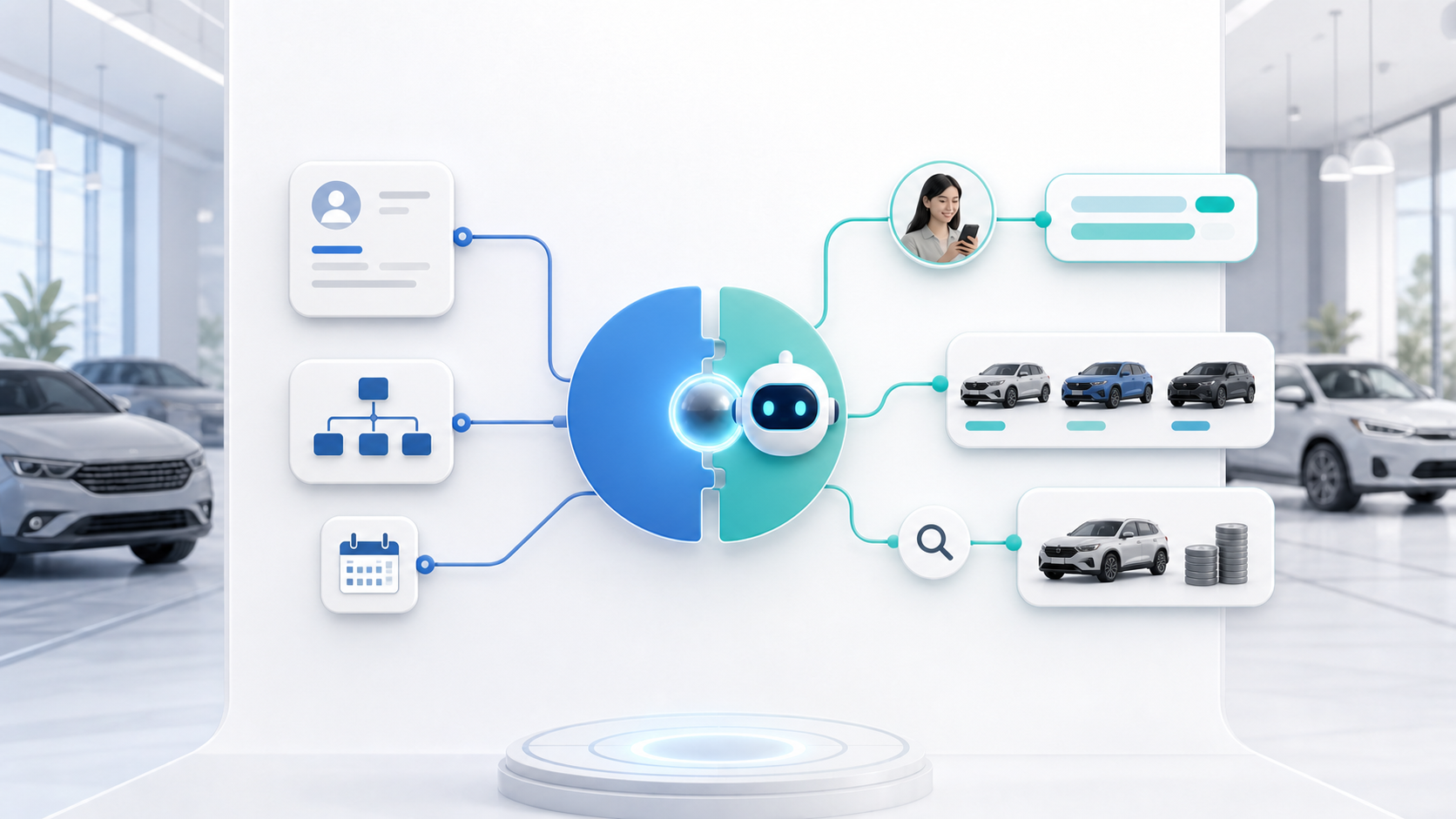
That is not a clean flowchart. It is a moving conversation with changing intent. This is where an AI agent becomes useful. An agent can reason over the current context, decide which tool to use next, observe the result, and continue the conversation based on what it learns. It can search inventory, answer dealership-specific questions, calculate payments, retrieve promotions, capture lead details, connect with a representative, or hand off into more specific flows such as sales, service, finance, trade-in, lease, parts, pre-qualification, or test drive.
The important part is not that the system is “agentic.” The important part is that autonomy is applied where the customer experience actually needs it.
The production pattern is usually both
In real systems, workflows and agents are not competing philosophies. They are complementary patterns. Workflows provide the rails: predictable routing, durable state, integration consistency, approvals, logging, and recovery. Agents provide adaptability inside the parts of the experience that are open-ended.
That balance matters for dealerships. Too much workflow and the experience feels rigid. Customers get trapped in narrow scripts that do not match how people actually shop. Too much agent autonomy and the operation becomes harder to control, test, and trust. Costs become less predictable. Debugging becomes harder. Errors can compound across multiple steps.
The better architecture is hybrid:
Use workflows to keep the business process reliable.
Use agents to make the customer experience adaptive.
What this means for AI strategy
A useful AI system is not the one with the most autonomy. It is the one with the right amount of autonomy in the right place.
Before adding an agent, ask:
- Can the process be defined ahead of time?
- Do the steps need to be repeatable and auditable?
- Is predictable cost or latency important?
- Would a fixed workflow handle most cases well?
- Does the next best step depend on what is discovered during the interaction?
If the path is known, use a workflow. If the path emerges through context, an agent may be the right fit. For automotive retail, that distinction is practical. Dealerships need structured operations and flexible conversations. They need systems that can reliably process leads, sync CRMs, manage appointments, and follow up at the right time. They also need customer-facing AI that can handle real shopper behavior as it unfolds. That combination is where AI becomes useful in the real world: structured enough for dealership operations, flexible enough for real shoppers.