Dealerships invest heavily in acquiring, reconditioning, and marketing used vehicles. From professional photography and online listings to digital advertising, each part of the merchandising process plays a role in generating sales opportunities. However, one valuable resource may not always be used at the right moment: the vehicle-history report.
For dealer principals and General Managers looking to improve used-car performance, making CARFAX reports accessible during website conversations presents an opportunity to strengthen buyer confidence, reduce unnecessary delays, and get more value from existing website traffic.
Making Vehicle History Part of the Sales Process
Vehicle-history reports are an established part of used-car retailing. They provide information about reported accidents, previous ownership, service records, and other details that may influence a purchasing decision. While dealerships regularly use these reports to support their sales presentations, making them available earlier in the buying process deserves consideration.
Consider a potential customer browsing a pre-owned SUV on a dealership website. The vehicle meets their requirements, but they want to review its history before arranging a showroom visit. Traditionally, this could involve requesting the report, waiting for a response, and returning to the conversation once the information becomes available.
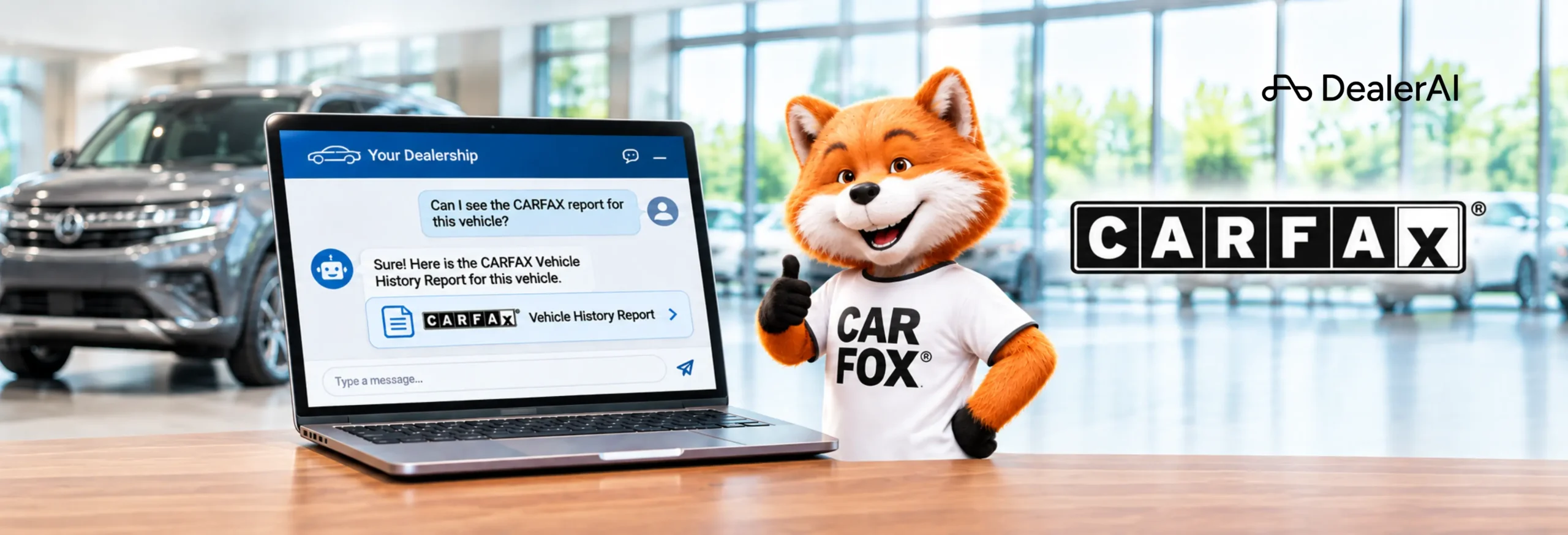
When the relevant CARFAX link can be shared directly through the website chatbot, that additional exchange may no longer be necessary. A dealership can even configure its AI assistant to offer the available report when it is relevant to the vehicle being discussed, rather than waiting for a specific request.
This gives management another opportunity to keep potential sales leads engaged with the store’s inventory and move conversations toward showroom appointments, including during evenings and weekends.
Connecting CARFAX Information With Website Conversations
Automotive AI technology is making it possible for dealership chatbots to provide more than general inventory information and appointment assistance. With access to appropriate vehicle data, these systems can respond to specific questions and share relevant information during an online conversation.
DealerAI, for example, allows dealerships to configure specialized instructions for AI agents through its management portal. In a walkthrough, DealerAI co-founder Bryan Xu demonstrates how an agent can be instructed to retrieve and share a vehicle’s CARFAX report link.
Depending on the dealership’s configuration, DealerAI can obtain CARFAX information through a direct integration or a dealership-provided database. When a website visitor asks about a particular vehicle, the AI agent can use the available information to identify and share the matching report link. The dealership can also define when this information should be offered as part of the conversation.
This capability illustrates how existing dealership data can become part of the digital sales process. Rather than relying on general responses, dealers can configure their AI assistants to provide information that is relevant to the vehicle being discussed and consistent with their sales procedures.
What Does This Mean for Used-Car Sales Performance?
For a used-car manager, the opportunity is not simply to provide vehicle-history reports faster. It is to strengthen how the dealership presents its inventory and handles sales opportunities generated through its website.
Used vehicles are evaluated on more than price and mileage. Condition, ownership history, service records, and reported damage can influence how a vehicle is perceived. Making relevant CARFAX information available during an online conversation gives the dealership another way to support its inventory presentation and address important questions before an appointment is scheduled.
From a management perspective, there are four areas worth considering:
- Website lead conversion: Providing relevant vehicle information during an active conversation can help maintain interest and encourage more inquiries to progress toward appointments.
- Used-vehicle merchandising: Accessible history reports can support a vehicle’s value proposition alongside its price, mileage, condition, and equipment.
- Sales cycle efficiency: Addressing important questions earlier may reduce additional exchanges before a prospect is ready to schedule a showroom visit.
- Multi-rooftop consistency: Auto groups can establish common standards for sharing vehicle information while accommodating each dealership’s inventory, systems, and operating procedures.
These opportunities depend on accurate information and proper configuration. CARFAX reports reflect available reported records, and they should not be treated as a complete guarantee of a vehicle’s condition. Dealerships must also ensure that any shared link matches the correct vehicle and remains accessible.
With these safeguards in place, vehicle-history information can become a more useful part of the dealership’s online sales process rather than a document supplied later in the conversation.
Getting More From Existing Website Traffic
Dealerships continually evaluate advertising performance, lead generation costs, and opportunities to improve digital conversion. While attracting additional website visitors remains important, improving how existing traffic is handled can also contribute to stronger sales performance.
Vehicle-history requests offer a practical starting point. Management can review how frequently these questions arise during website conversations, how they are currently handled, and whether the resulting inquiries progress to showroom appointments.
A dealership could then compare website engagement, appointment conversion, show rates, and completed sales before and after introducing automated report sharing. These measurements would help determine whether making vehicle-history information more accessible contributes to meaningful improvements in sales performance.
For auto group executives, the same evaluation can be applied across multiple rooftops. Comparing results between stores may reveal opportunities to improve digital merchandising standards and identify communication practices worth adopting more broadly.
Making Better Use of Existing Sales Resources
As automotive AI becomes more integrated into dealership operations, its value will increasingly depend on how effectively it supports established sales processes. Connecting relevant vehicle information with online conversations is one practical application that can be implemented without changing the dealership’s overall approach to selling cars.
CARFAX reports are already a familiar resource in used-car retailing. Making that information available at the right stage of a website conversation gives dealerships another opportunity to strengthen inventory presentation, support buyer confidence, and move qualified sales opportunities toward the showroom.
For dealer principals, GMs, and auto group executives, the consideration is straightforward: before investing more in generating additional traffic, evaluate whether the dealership is making full use of the information and sales opportunities it already has.
See how DealerAI connects vehicle information with dealership conversations.