How AI Helps Dealerships Drive Year-End Sales
Turning existing CRM leads into additional sales opportunities across dealerships and auto groups.
As dealerships and auto groups enter the final selling weeks of 2026, generating additional sales does not necessarily mean acquiring more leads. Opportunities may already exist within their CRM databases.
For auto groups managing multiple rooftops, inventory positions, manufacturer incentives and sales targets can vary considerably from one dealership to another. AI-powered follow-up offers a way to establish a consistent lead reactivation strategy across the organization while supporting the individual sales priorities of each store.
The objective is to generate additional sales opportunities from the marketing investments already made throughout the year.
Market Outlook
According to Cox Automotive’s November 24 forecast, U.S. new-vehicle sales volume is expected to decline by 10.3% compared with October, largely due to five fewer selling days. On a per-selling-day basis, however, the sales pace is tracking approximately 1% ahead of November 2025.
Despite year-end promotions, affordability remains a concern, and Cox Automotive does not anticipate a strong increase in sales through the remainder of 2026.
Market conditions will vary by region, brand and rooftop. For dealership and group leadership, making better use of existing sales opportunities can complement ongoing advertising and promotional initiatives heading into December.
Get More From Existing Leads
Throughout the year, dealerships invest in digital advertising, third-party lead providers, website traffic and other customer acquisition channels. Across an auto group, these investments can represent a substantial marketing expenditure.
Not every inquiry results in an immediate purchase. Some customers postpone their decisions, while others wait for different inventory, pricing or financing options.
AI follow-up allows dealerships to revisit eligible CRM contacts at scale, using previous conversations and current vehicle information to make outreach more relevant.
For group leadership, lead reactivation can become another measurable component of the sales strategy, alongside new lead generation and existing BDC initiatives.
Which Leads to Prioritize
Purchase intent, lead age, previous conversations and inventory changes can help determine which CRM contacts are worth revisiting before year-end.
| CRM lead segment | Reason to reconnect |
|---|---|
| Recent unsold leads | Customers who may still be actively shopping |
| Leads from 60–90 days ago | Changes in pricing, inventory or purchase timing |
| Previous vehicle inquiries | Relevant price reductions or updated availability |
| Missed appointments | Opportunity to reschedule a showroom visit |
| Postponed purchases | Applicable incentives or alternative vehicles |
| Older CRM leads | Renewed purchase interest |
Priorities may differ across rooftops. A dealership looking to move aging used inventory may focus on previous inquiries for specific vehicles, while another store may concentrate on customers eligible for current new-vehicle offers.
Outreach should account for customer consent, communication preferences and CRM status, excluding contacts who have opted out, already purchased or are otherwise ineligible for the campaign.
Connect Inventory With Sales
Year-end pricing adjustments and inventory decisions can create timely reasons to reconnect with previous leads.
Consider an auto group with three dealerships facing different sales priorities:
| Rooftop | Sales priority | AI follow-up opportunity |
|---|---|---|
| Dealership A | Aging used inventory | Reconnect with previous leads following price reductions |
| Dealership B | New-vehicle sales targets | Engage eligible prospects with applicable manufacturer offers |
| Dealership C | Unsold internet leads | Reactivate previous inquiries and generate appointment opportunities |
With connected AI workflows, each dealership can initiate outreach based on its own inventory, customer history and sales objectives.
For example, when the price of a used SUV changes, an automated workflow can notify eligible customers who previously expressed interest in that vehicle. If a customer responds, AI can continue the conversation using relevant vehicle information and help arrange a showroom appointment.
This connects inventory management with lead follow-up, creating a direct link between merchandising decisions and potential sales opportunities.
Scale Follow-Up With AI
Traditional database campaigns can distribute promotional messages to a large audience. AI-powered follow-up can build on this approach by incorporating customer intent, conversation history and changing dealership information.
| Traditional database campaign | AI-powered follow-up |
|---|---|
| General promotional messaging | Personalized outreach based on customer context |
| Scheduled campaign dates | Scheduled and event-triggered communication |
| Predetermined message sequences | Follow-up adapted to customer responses |
| Separate communication channels | Connected SMS, email and phone workflows |
With supported CRM integrations, automated sequences can also account for changes in lead status before continuing outreach.
For an automotive group, this provides an opportunity to scale follow-up across multiple dealerships without requiring every rooftop to use identical campaigns.
Group Strategy, Local Execution
A group-wide AI strategy does not require every dealership to operate the same way.
Brands, inventory, promotions, BDC structures and sales processes can differ across an organization. The technology needs to accommodate these differences while supporting common standards for lead management and customer communication.
Group leadership can establish shared objectives around lead reactivation, follow-up coverage and appointment generation. Individual dealerships can then configure outreach according to their own sales priorities and available inventory.
This balance between consistency and flexibility is an important consideration when evaluating AI follow-up for auto groups.
Measure the Sales Impact
The number of messages sent provides only a limited indication of campaign performance. For dealer principals and group executives, the more meaningful question is whether outreach produces additional sales opportunities.
Useful performance measures include:
- Eligible CRM leads enrolled in campaigns.
- Customer response rates.
- Reactivated sales opportunities.
- Appointments booked and shown.
- Vehicle sales attributed to re-engaged leads.
- Cost per reactivated sales opportunity.
Using consistent definitions across dealerships makes performance comparisons more meaningful. Results should also be considered alongside lead volume, inventory availability, selling days and local market conditions.
These insights can help inform future marketing investments, lead management strategies and sales planning across the group.
Build the January Pipeline
Not every customer who re-engages in December will complete a purchase before year-end.
Some may be waiting for a particular vehicle, evaluating their trade-in or planning a purchase in the new year. Maintaining those conversations can help dealerships enter January with an active sales pipeline.
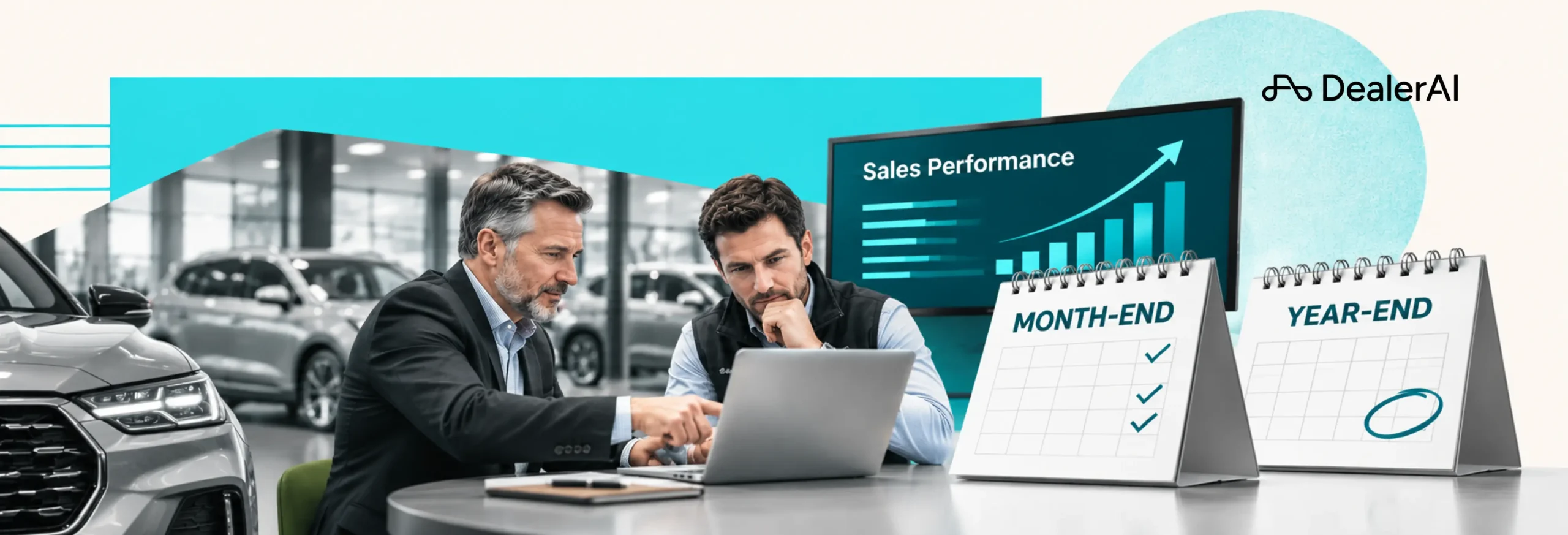
For auto groups, a continuous follow-up strategy also provides an opportunity to maintain sales momentum across reporting periods, rather than limiting customer engagement to individual month-end campaigns.
From Leads to Sales Opportunities
DealerAI Reach helps dealerships and auto groups automate personalized follow-up across SMS, email and phone through connected workflows.
From reactivating older CRM leads to initiating outreach when vehicle prices change, Reach supports dealership-specific sales strategies while helping groups establish more consistent follow-up practices across rooftops.
Specific workflow capabilities depend on the connected systems, available dealership data and campaign configurations.
As 2026 draws to a close, additional sales opportunities may already exist within the leads your dealerships have invested in acquiring.
Frequently Asked Questions
How can AI help dealerships drive year-end sales?
AI can help dealerships reactivate unsold CRM leads, reconnect with previous vehicle inquiries and initiate personalized outreach when pricing, inventory or offers change. These activities can generate additional sales conversations and appointment opportunities without necessarily increasing lead acquisition spending.
Can auto groups use AI follow-up across multiple dealerships?
Yes. Automotive AI platforms such as DealerAI support dealership-specific follow-up configurations, allowing auto groups to establish consistent communication practices while accommodating different brands, inventory, sales priorities and operating processes.
Can AI automatically contact previous leads after a vehicle price drop?
Yes. With the necessary inventory data and workflow configuration, DealerAI Reach can trigger personalized outreach to eligible customers who previously expressed interest in a vehicle when its price changes.
How should auto groups measure AI lead reactivation performance?
Group leadership can evaluate customer response rates, reactivated opportunities, appointment conversion, attributed vehicle sales and campaign costs. Consistent reporting definitions help management compare results across rooftops and assess the return on existing lead investments.
Get More From Your Existing Leads
See how DealerAI can support your dealership’s or auto group‘s sales strategy, from year-end opportunities to ongoing lead conversion.