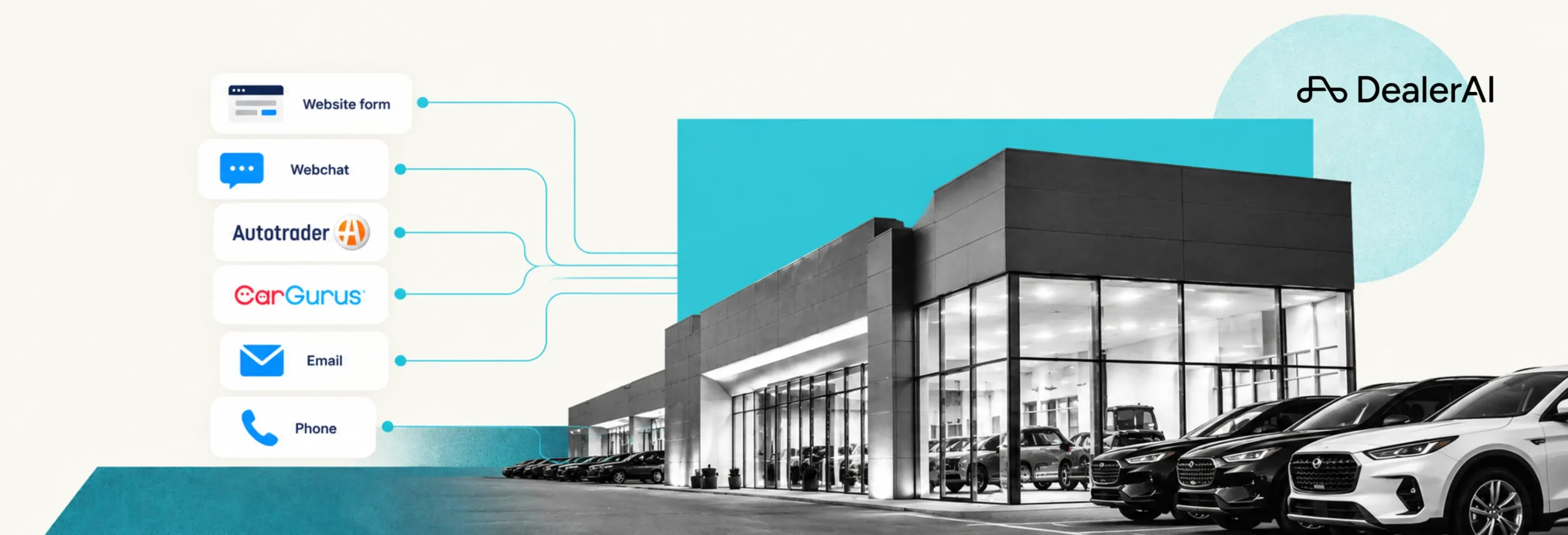
Dealerships invest heavily in generating internet leads, but understanding what happens after those opportunities enter the CRM is often more difficult. Sales managers can review response times, completed activities and appointment reports, yet those numbers don’t always reveal whether follow-up is creating meaningful sales opportunities.
As artificial intelligence becomes more common in automotive retail, dealership owners and auto group executives face a new question: How do you determine whether AI follow-up is delivering a return on your investment?
The answer goes beyond how quickly a system responds or how many messages it sends. Meaningful AI follow-up performance should be measured through customer engagement, showroom appointments, recovered sales opportunities and the consistency of the dealership’s lead management process. These measures help leadership understand whether the technology is contributing to the business rather than simply increasing activity in the CRM.
AI Adoption Is Growing, but Are Dealerships Seeing Results?
According to Cox Automotive’s 2026 AI in Auto Retail Tracker, 82% of dealers reported using AI in some form, while 40% were using it to coordinate customer follow-up. However, only 22% of AI-using dealerships reported experiencing sales or revenue growth from the technology.
These findings highlight an important distinction between implementing AI and measuring its business impact. A dealership may introduce automated follow-up, improve its initial response time and increase the number of customer messages sent without necessarily seeing a corresponding increase in showroom traffic or vehicle sales.
For dealer principals and GMs, the priority should be establishing what the technology is expected to accomplish before evaluating its performance. Auto group leadership faces an additional challenge: ensuring that results can be assessed consistently across rooftops while accounting for differences in inventory, market conditions and individual store operations.
Five Areas That Reveal Whether AI Follow-Up Is Working
1. Lead Response Time and Follow-Up Consistency
Speed to lead remains an important measure of dealership performance, particularly when customers submit inquiries outside regular showroom hours. A prompt response helps ensure that opportunities are acknowledged, but the first message represents only the beginning of the sales process.
Management should also examine whether follow-up continues consistently when a customer doesn’t respond immediately. This includes understanding how frequently leads receive additional contact, whether messages remain relevant to the original inquiry and how the process handles opportunities that require attention from a salesperson.
For an auto group, consistent follow-up creates an opportunity to establish common performance standards across its dealerships. Individual rooftops may operate differently, but leadership should still be able to determine whether incoming opportunities are being handled within an agreed timeframe and according to the group’s expectations.
2. Customer Engagement and Reply Rates
The volume of messages sent is easy to measure, but it provides limited insight into customer interest. A more useful indicator is how many customers respond and whether those conversations lead to meaningful next steps.
Courtenay Mazda offers an example of how campaign relevance can influence engagement. According to DealerAI’s published case study, the dealership achieved approximately a 10% reply rate through broader outreach over a 90-day period. By introducing more targeted campaigns based on customer segments and interests, reply rates increased to more than 33%, with over 150 customer call requests generated.
The results demonstrate why dealerships should evaluate their follow-up campaigns by audience and purpose rather than relying on one overall response rate. A customer who submitted an inquiry yesterday may behave differently from someone who last contacted the dealership six months ago. Understanding those differences gives management a clearer picture of which approaches are generating engagement and where adjustments may be needed.
3. Appointments and Sales Opportunities
A customer response is encouraging, but the next consideration is whether that conversation develops into a showroom appointment or another meaningful sales opportunity. Dealerships should distinguish between leads that have replied, appointments that have been confirmed and customers who actually arrive at the store.
This distinction becomes particularly valuable when reviewing the overall sales process. A dealership generating strong engagement but relatively few appointments may need to examine how interested customers are transferred to the sales team. If appointments are being booked but showroom attendance remains low, the issue may lie elsewhere in the process.
By connecting follow-up activity with appointment outcomes and vehicle sales, management can identify where opportunities are progressing and where they may be losing momentum. The objective is not simply to increase the number of conversations, but to create more opportunities that the dealership can convert into business.
4. Recovering Opportunities From Existing CRM Leads
Most dealerships have accumulated substantial numbers of leads from previous marketing campaigns, website inquiries and showroom visits. Although some customers may have purchased elsewhere or are no longer in the market, others may still represent potential sales opportunities.
Rather than focusing exclusively on generating additional leads, dealerships can evaluate whether targeted re-engagement campaigns help recover value from their existing CRM database.
At Volvo Cars Markham, DealerAI Reach was used to contact approximately 1,500 older CRM leads through a seven-day campaign focused on a vehicle trade-up opportunity. The campaign generated around 225 replies and contributed to six vehicle sales, according to DealerAI’s published case study.
While results vary depending on the quality of the database, campaign relevance and market conditions, this example illustrates an additional way to assess the value of follow-up technology. For dealership owners, recovering opportunities from leads that have already been acquired can be particularly attractive because the original lead-generation expense has already been incurred.
5. CRM Accuracy and Management Visibility
A successful follow-up process should also recognize when customer circumstances change. If a salesperson has already booked an appointment, the dealership shouldn’t continue sending messages asking whether that customer is interested in visiting the showroom. Similar considerations apply when a vehicle has been sold, a lead becomes inactive or a customer requests no further communication.
This requires AI follow-up systems to work with current dealership information rather than relying exclusively on predefined message schedules. For example, DealerAI Reach can check supported CRM records before sending the next follow-up message and stop a sequence when a qualifying status change is detected. The information available and the resulting actions depend on the dealership’s CRM integration and configuration.
For management, these controls are important because they help protect the quality and consistency of customer communication. They also reinforce the value of having clear visibility into follow-up activity, including which opportunities are active, which require attention and why certain automated conversations have ended.
What Should Dealership Executives Look for Before Investing?
Choosing an AI follow-up provider involves more than comparing software features. Dealership executives need to understand how the platform will operate within their existing sales process, how it works with the CRM and what information management will receive to evaluate results.
A product demonstration should therefore include realistic dealership situations, not just examples of successful automated conversations. Ask what happens when a customer stops responding, when an appointment is booked outside the system or when a salesperson needs to take over a conversation. Understanding these scenarios can reveal more about the platform’s suitability than a lengthy list of capabilities.
For auto groups considering a broader implementation, it may also be worthwhile to evaluate a defined use case at one or more rooftops before expanding. Establishing baseline performance and reviewing results over a comparable period can help leadership determine whether the technology meets the group’s operational requirements.
How to Evaluate the Return on AI Follow-Up
Calculating return on investment begins with understanding the dealership’s existing performance. Management should establish baseline measures for lead response, customer engagement, appointment conversion and sales before introducing or expanding an AI follow-up program.
Once the technology is in place, results can be compared against similar lead sources, campaign types and operating periods. Any financial assessment should consider the additional gross profit reasonably attributable to the program, along with software costs and related operating expenses. Changes in inventory, pricing, promotions and market conditions should also be taken into account.
The purpose of this exercise is not to produce the most impressive performance report. It is to give dealership leadership reliable information for deciding whether to maintain, expand or adjust the investment.
Building a More Consistent Follow-Up Process
For dealerships evaluating their next investment in AI, the most valuable starting point may be identifying where the current follow-up process has the greatest opportunity for improvement. One store may need stronger after-hours response coverage, while another could benefit from more consistent follow-up with existing CRM leads.
DealerAI supports these requirements through its Webchat, Reach and Voice products, helping dealerships manage customer communication from the initial inquiry through ongoing follow-up. The appropriate configuration depends on the dealership’s existing systems, operational priorities and the workflows it wants to support.
Ultimately, the value of AI follow-up should be visible in the dealership’s business results. Faster responses and automated communication are useful capabilities, but the measures that matter most to ownership are the sales opportunities generated, the consistency of the process and the confidence that existing leads are being properly managed.
For an owner or auto group executive, that is the difference between purchasing another software platform and making an investment that supports the dealership’s long-term performance.
Interested in understanding where AI follow-up could fit into your dealership’s operations?
Explore DealerAI and see how its solutions support lead management and customer communication.
Frequently Asked Questions
How long does it take to see results from AI follow-up at a dealership?
Initial engagement results, such as customer replies and appointment requests, may become visible within the first few weeks. Measuring the impact on vehicle sales generally requires a longer evaluation period and enough comparable lead data to identify meaningful changes.
Can AI follow-up work with our existing dealership CRM?
Many AI follow-up platforms integrate with dealership CRMs, although the information available and supported workflows vary by system. Before selecting a provider, confirm whether it can access lead status, appointment information and relevant communication history, and whether it can stop follow-up when a customer books or purchases.
Can AI follow-up be managed across multiple dealerships in an auto group?
Yes. AI follow-up can help auto groups establish consistent lead management standards across multiple rooftops while allowing each dealership to maintain its own workflows, inventory and customer communication requirements.
With DealerAI, group leadership can coordinate follow-up strategies across participating dealerships, with configurations tailored to each store’s operations and supported integrations.