Quick answer: To win back a car buyer who stopped replying:
- Start with what they asked about. Use the vehicle, trade, payment question or appointment they discussed before.
- Give them a reason to answer now. Share a new inventory match, price update, open appointment time or useful answer.
- Know when to stop. Pause the follow-up when they reply, book, buy or opt out. Then route the conversation to the right person or store.
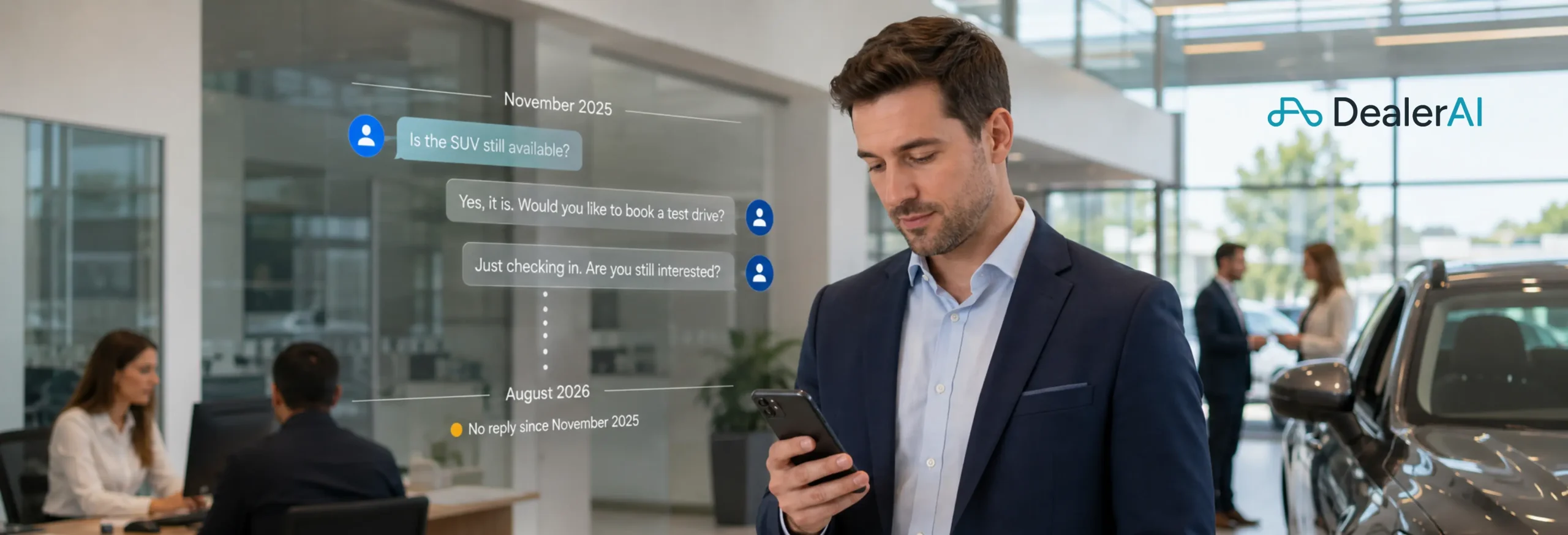
Every dealership has quiet leads. A shopper asks a good question, talks about a vehicle or books a test drive. Then the replies stop.
For a GM or auto group sales leader, this is bigger than one missed follow-up. It is whether every store has a clear way of working leads that stopped replying.
Why Do Car Buyers Go Quiet?
A quiet lead is not always a dead lead. The buyer may still be comparing stores, waiting on a trade value, thinking through the payment or looking at a different vehicle.
Other common reasons include:
- The timing changed.
- The vehicle was not the right match.
- A question never got answered.
- The follow-up came through the wrong channel.
- The message felt generic or repetitive.
Some shoppers will buy somewhere else. Others still want a vehicle, but they do not have a reason to keep talking to your store.
That is why “still interested?” usually gets no reply. It asks the buyer to restart the conversation without giving them anything new or useful.
Why Consistent Follow-Up Is Hard to Maintain
Good follow-up takes more work than sending a scheduled reminder.
Before reaching out, someone may need to:
- Read the shopper’s previous conversation
- Confirm which vehicle they asked about
- Check whether that vehicle is still available
- Look for a similar unit at another rooftop
- Review price or inventory changes
- Write a message that fits the shopper’s situation
- Send it at the right time
- Stop the sequence when the shopper replies, buys or opts out
A strong BDC team can do this well. The challenge is doing it consistently for every eligible lead across every store, channel and follow-up stage.
This is where automotive AI is useful. It can review the available lead and inventory information, prepare a relevant message, follow the dealership’s schedule and stop rules, and route replies to the right person or rooftop.
The value for management is not simply sending more messages. It is creating a dependable follow-up standard across the group without requiring employees to research and write every routine message by hand.
At a Glance
| What management controls | Weak follow-up | Strong follow-up |
|---|---|---|
| Audience | One cold-lead list | Grouped by vehicle, stage or reason |
| Message | Generic check-in | Uses the vehicle and previous question |
| Timing | One attempt, then nothing | A consistent, dealership-controlled sequence |
| Channel | One channel only | SMS, email and phone when appropriate |
| Reason to reply | No new value | Inventory, price, appointment or answer |
| Ownership | Unclear after a reply | Routed to the right person or store |
| Measurement | Messages sent | Replies, appointments, shows and sold outcomes |
A Real Example: Courtenay Mazda
Courtenay Mazda was already following up with older leads. The challenge was that broad campaigns used the same message for shoppers with different vehicle interests and needs.
Broad outreach produced a reply rate of roughly 10%. After the dealership used DealerAI Reach to create more focused campaigns based on vehicle interest and previous conversations, targeted campaigns produced reply rates above 33%.
The dealership also captured more than 150 call requests over 90 days.
This does not mean every dealership will see the same result. Audience quality, inventory, timing and the reason for reaching out all affect performance. In this program, more relevant follow-up produced more than three times the reply rate of broad outreach.
Read the full Courtenay Mazda case study
1. Choose the Right Leads
The first decision is which leads should get the message.
One list marked “cold leads” can hide very different shoppers. Someone who asked about a used SUV 30 days ago should not get the same message as someone who missed a test drive or went quiet during a trade discussion.
Useful groups include:
- Leads tied to a specific vehicle or model
- Leads whose requested vehicle already sold
- Unsold showroom visits
- Missed or cancelled appointments
- Leads with an open trade, payment or inventory question
- Older leads that now match new inventory
For an auto group, this search should include inventory at other rooftops. If a sister store now has a close match, the group has a real reason to reopen the conversation.
2. Give Them a Reason to Reply
A strong message answers three simple questions:
- Why is the store reaching out?
- Why does it matter to this buyer?
- What is the easiest next step?
For example:
Hi Jordan, you asked about a compact SUV with all-wheel drive last month. A similar one just arrived. Want me to send the details?
This remembers what the shopper wanted and makes replying easy.
Other good reasons to reconnect include a price change, a new test-drive time, an update on a trade discussion or a full answer to a question that never got resolved.
It is also useful to ask whether the search has changed. That can reveal a different model, budget or timeline.
3. Use the Right Channel and Know When to Stop
The 2026 Pied Piper Internet Lead Effectiveness Auto Dealer Group Study found that top dealer groups were twice as likely as lower-performing groups to follow up across multiple channels. They were also three times more likely to offer an appointment.
Each channel works best for a different job:
- SMS: A short question, appointment option or inventory update
- Email: Vehicle details, comparisons or a longer answer
- Phone: A real conversation when the buyer asks for a call or needs more help
Multi-channel follow-up does not mean sending the same message everywhere at once. It means the buyer experiences one connected conversation across channels.
The sequence should pause or stop when the shopper replies, books, buys, asks not to be contacted, or when the vehicle or offer behind the message is no longer valid.
This matters most across an auto group. One store should not keep messaging a customer another store already sold.
How DealerAI Reach Fits
DealerAI Reach helps dealerships maintain consistent follow-up across eligible leads without asking the BDC to manually research and write every routine message.
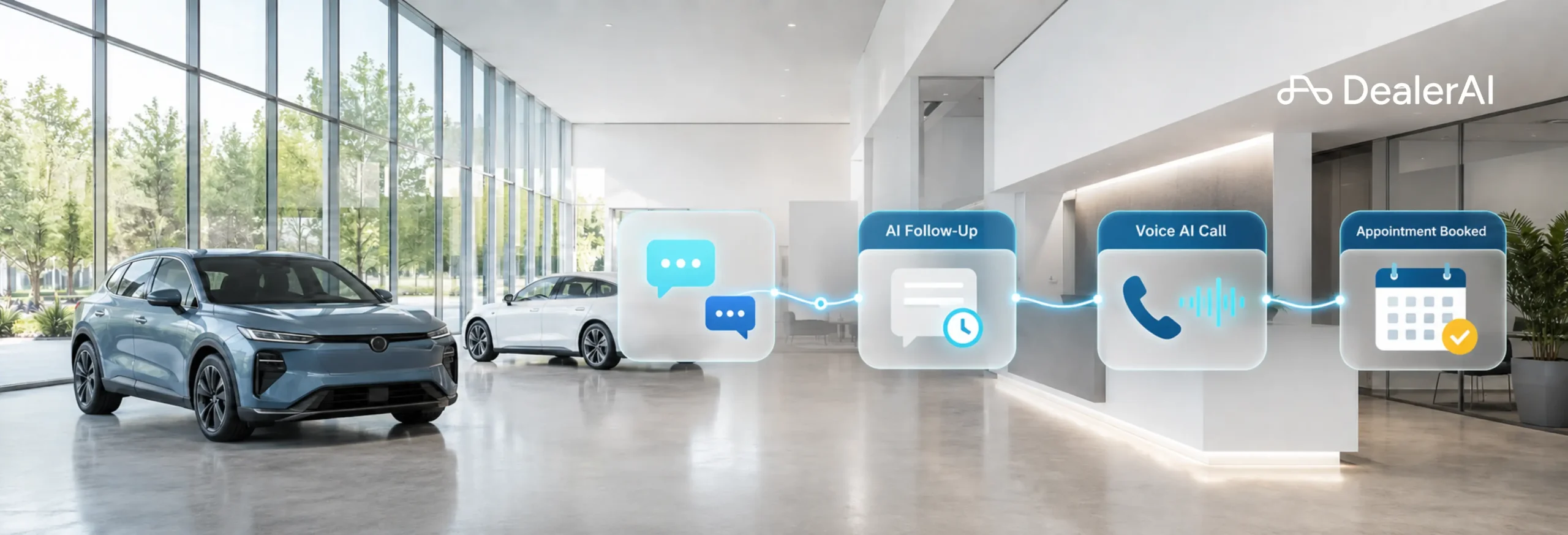
It coordinates voice, SMS and email follow-up using the timing, audience and rules set by the dealership. Reach can use the shopper’s previous conversation, vehicle interest and current inventory information to prepare a more relevant message. It also pauses when a shopper replies and routes the conversation to the right person or rooftop.
DealerAI reports a 4.1x engagement lift for Reach follow-up sequences compared with single-channel email drip templates. DealerAI also reports that Reach rebooked 31% of missed sales and service appointments within 48 hours. These are platform-reported results, and individual dealership results will vary.
Reach does not replace advertising or create new car shoppers. It is built for dealerships that already have leads in their CRM and want a more dependable way to follow up.
Not every quiet lead comes back, and not every lead belongs in a re-engagement campaign. Customers who already bought, opted out or no longer fit should come out of the list. The goal is to find the ones who still have a reason to talk.
For management, the benefit is a more consistent process across the group. Automation can reduce the manual work, operating cost and training required for routine follow-up while allowing the sales and BDC teams to focus on active customer conversations.
What Should Management Measure?
Reply rate is the first signal, not the final answer. Review:
- Reply rate by lead group
- Qualified conversations
- Appointments set and shown
- Sold outcomes tied to the campaign
- Opt-out rate
- Time from reply to a person taking over
- Results by store, source and channel
- Cross-store inventory matches
If replies go up but appointments do not, the next step in the process may need attention. If one group performs better, look at what made its audience and message more relevant.
Frequently Asked Questions
How Do You Win Back a Car Buyer Who Stopped Responding?
Use the buyer’s previous vehicle, question or sales stage and give them a clear reason to reply. An inventory match, price update, appointment option or trade update offers more value than a generic check-in.
How Many Times Should a Dealership Follow Up With an Internet Lead?
There is no single right number. Timing should reflect the lead source, stage, previous engagement and channel, with clear limits and stop conditions set by management.
Can AI Re-engage Older Dealership Leads?
Yes. Automotive AI can group aged leads, use relevant conversation and inventory details, send scheduled follow-up, detect replies and route active opportunities to the right person or store.
Better Follow-Up Starts With Relevance
A quiet buyer does not need another generic reminder. They need a reason to keep talking.
Courtenay Mazda’s results show what targeting can do. Broad outreach produced a reply rate of roughly 10%. Targeted campaigns exceeded 33% in that program.
The opportunity was already sitting in the CRM. Better context helped reopen it.
If you want to estimate the value of stronger follow-up, try DealerAI’s ROI calculator.
Or, book a demo to see how DealerAI can manage follow-up across your dealership or auto group.