Quick Answer: Dealership follow-up becomes difficult because the number of leads in a CRM can quickly exceed what sales and BDC teams can realistically review and contact by hand. Relevant follow-up also requires an understanding of previous conversations, vehicle interest, pricing and inventory changes. AI can help dealerships maintain communication across a much larger lead database and recognize when an older opportunity becomes worth revisiting.
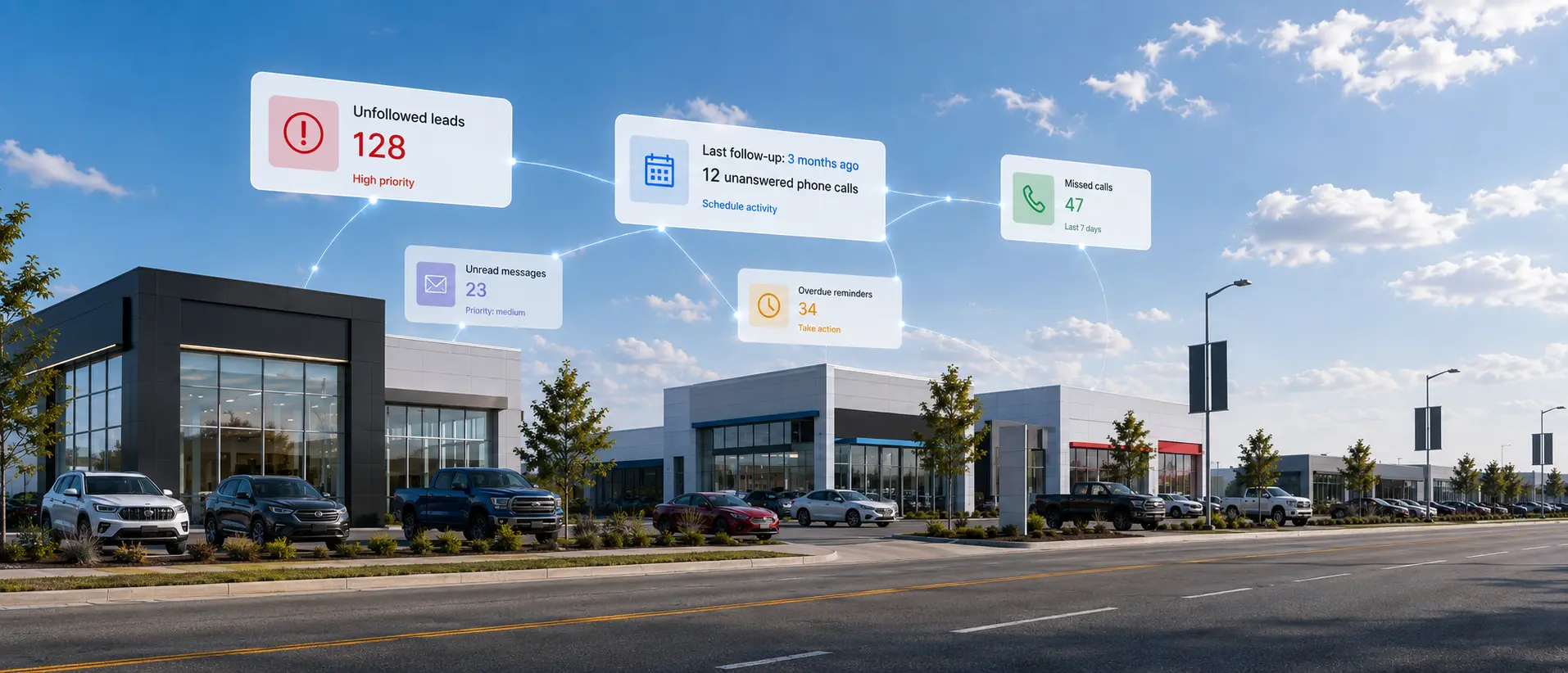
Most dealerships already have a process for following up with new leads. The harder challenge begins after the first few days, when today’s inquiries start competing with hundreds or thousands of previous opportunities for staff attention.
Salespeople and BDC representatives still have new customers to answer, appointments to manage, phone calls to return and active deals to move forward. Meanwhile, the CRM continues to grow.
A customer who stopped responding last month may still be in market. Another shopper may become relevant again because a vehicle price changed. Someone who could not find the right trim three weeks ago may now have a suitable option available.
Recognizing those opportunities consistently requires more capacity than most teams can provide manually.
The CRM Can Hold More Opportunities Than a Team Can Revisit
Consider a simple example.
Suppose a salesperson or BDC representative has enough time to properly revisit 10 older leads each day after handling new inquiries and active customers. Over 250 working days, that employee could review approximately 2,500 older leads.
Now consider a dealership CRM containing 30,000 previous leads.
At the same pace, one employee would need roughly 12 working years to make a single pass through the database. Even a five-person team would need more than two years, before accounting for the new leads arriving every day or the need to follow some customers more than once.
These numbers are only an illustration, and every dealership has a different workload. The capacity problem remains the same. CRM databases can grow much faster than a team can manually revisit them.
Older opportunities are especially easy to overlook because new leads and active customers naturally take priority. A customer who stopped responding several weeks ago may still represent a valid opportunity, but there may be little reason for a staff member to reopen that record unless something changes.
AI gives dealerships another way to maintain coverage across that larger pool of customers.
Relevant Follow-Up Requires More Than a Reminder
Traditional automation has helped dealerships maintain a basic cadence. A lead might receive an immediate response, another message the next day and several additional touches over the following week.
Timing provides useful structure, although the date of the next message does not necessarily determine what the customer should hear.
Two shoppers who entered the CRM on Monday may look very different by Wednesday. One may have discussed a trade-in, asked about two specific vehicles and responded several times. Another may not have replied at all.
Creating an appropriate next message requires context. Dealership staff can review previous conversations before responding, but repeating that process across hundreds or thousands of leads takes considerable time.
Customer communication can also move between SMS, email, webchat, phone calls and staff conversations. Pied Piper’s 2026 Auto Dealer Group Study found that 87% of dealerships among the five highest-performing groups responded through multiple communication paths, compared with 44% among the seven lowest-performing groups.
As more channels become involved, maintaining a useful customer history becomes increasingly important. AI can help review previous conversations, vehicle interest and recent activity before the next interaction, reducing the amount of manual work required for routine follow-up.
Some of the Best Follow-Up Opportunities Appear Later
An older lead can become relevant again because something changes at the dealership.
Imagine a shopper who asked about a particular SUV but stopped responding because the price was outside their budget. Three weeks later, the dealership reduces the price.
That change creates a legitimate reason to reconnect.
Under a manual process, someone would need to notice the adjustment, identify previous customers who showed interest in that vehicle, review their histories and decide who should receive an update.
Similar opportunities appear when new inventory arrives, a promotion begins, another suitable vehicle becomes available or a dealership launches a trade-up program.
Finding every relevant connection across thousands of leads is difficult for people to do continuously. AI-driven workflows can monitor selected signals and use them to trigger follow-up when something meaningful changes.
Scheduled sequences still provide regular coverage. Event-driven automation adds another layer by allowing changes in pricing, inventory, customer activity or promotions to create new reasons for communication.
Consistent Follow-Up Can Bring Older Opportunities Back Into the Pipeline
A campaign from Volvo Cars Markham shows what can happen when automation extends follow-up beyond the leads a dealership team has time to work manually.
The dealership’s staff were focused on new and active opportunities, leaving a large pool of older CRM leads without plans for additional follow-up. Volvo Cars Markham used DealerAI to launch a one-week outbound campaign to approximately 1,500 of those contacts.
The sequence included an initial trade-up message followed by three automated follow-ups. Each stage introduced a different reason to continue the conversation rather than repeating the original promotion.
Within that single week, 15% of the contacts replied and the campaign contributed to six vehicle sales.
The result is significant because those opportunities were already sitting in the dealership’s CRM. Generating the six sales did not require purchasing another source of leads. Automation gave the dealership a practical way to revisit customers that staff did not have the capacity to work consistently alongside new inquiries and active deals.
At a larger scale, the same principle can apply across thousands of older records. AI can maintain follow-up, use previous customer context and bring relevant conversations back to the sales team when a customer responds or a new reason to reconnect emerges.
Personalization Still Matters at Scale
Reaching more customers does not require sending one identical message to everyone.
A useful sequence can vary the conversation as it progresses. Previous vehicle interest, customer history, current inventory and recent activity can all help determine which information is relevant.
This becomes particularly important when working older leads. A customer who looked at an XC60 six months ago has a different history from someone who recently asked about an XC40 trade-in. Treating both records as generic database contacts gives up much of the value already stored in the CRM.
Modern AI makes it practical to review that context across a much larger number of records than an employee could reasonably read one by one.
For dealership management, this creates an opportunity to treat the existing CRM as an active source of potential business rather than a growing archive of past inquiries.
What Should Modern Follow-Up Automation Handle?
A practical dealership follow-up system should maintain coverage across both recent and older leads. Previous conversations and vehicle interest should remain available when the next interaction occurs, while replies, appointments and staff involvement should influence how the workflow continues.
Changes at the dealership also matter. Price adjustments, inventory arrivals, promotions and trade-up opportunities can provide timely reasons to reconnect.
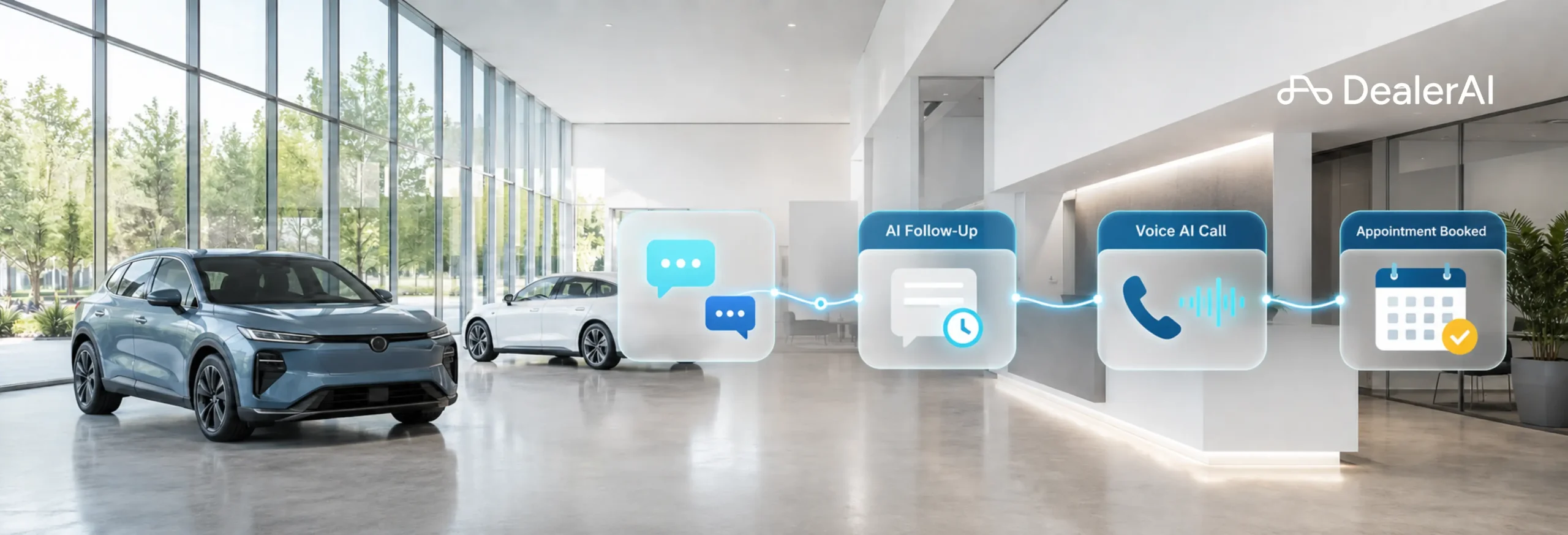
Advanced automation can monitor these signals continuously across a larger lead database. DealerAI Reach supports follow-up and re-engagement across SMS, email and voice while using customer and vehicle context to guide communication.
Website conversations can also contribute to the broader customer history through DealerAI Webchat. For auto groups, Fuse Inventory can extend the process further when another participating dealership has a vehicle that better matches the shopper’s needs.
Salespeople and BDC staff remain essential once a customer becomes actively engaged and the conversation requires product knowledge, judgement, negotiation or relationship-building. AI expands the amount of monitoring and routine communication that can happen before and around those conversations.
Frequently Asked Questions
What is dealership follow-up automation?
Dealership follow-up automation uses software to manage customer communication after an inquiry or previous interaction. Common applications include SMS, email, phone outreach, appointment follow-up, lead nurturing and re-engagement of older opportunities.
Why are scheduled follow-up sequences alone not enough?
Schedules help maintain cadence, but customer circumstances and dealership conditions continue to change. Vehicle price adjustments, inventory arrivals, promotions, customer replies and new activity can all affect which follow-up is most relevant.
How can AI personalize dealership follow-up at scale?
AI can use previous conversations, vehicle interest and customer activity to help determine relevant communication. This allows dealerships to maintain broader follow-up coverage without requiring employees to manually review every lead history before each routine message.
How does DealerAI help dealerships follow up with older CRM leads?
DealerAI Reach supports automated follow-up and re-engagement across SMS, email and voice while using previous customer conversations, vehicle interest and activity to guide communication. Dealerships can use sequences and relevant triggers to revisit a much larger portion of their CRM without requiring staff to manually review every older lead.
Managing Follow-Up at Scale
As a dealership database grows, consistent follow-up becomes a capacity issue. Thousands of previous customers may still represent potential opportunities, but recognizing the right person, at the right moment, with a relevant reason to reconnect is difficult to accomplish manually.
AI allows dealerships to monitor a much larger portion of that database, maintain routine communication and respond when new signals make an older lead relevant again. Staff can then direct more attention toward customers who are actively responding and require personal involvement.
For dealership management, a meaningful source of future sales may already exist inside the CRM. Better follow-up automation provides a practical way to develop more of those opportunities without asking the sales or BDC team to remember and review every lead themselves.
Learn how DealerAI can support more consistent follow-up across your existing lead database at DealerAI.com.