A dealership can respond fast to a new lead and still lose the deal a few days later.
The first reply goes out on time. The lead lands in the CRM. A task gets assigned. Then the customer stops answering, the salesperson gets pulled into a showroom guest, or the next scheduled touch gives the customer no real reason to reply.
This is the gap AI follow-up systems for car dealerships are built to close.
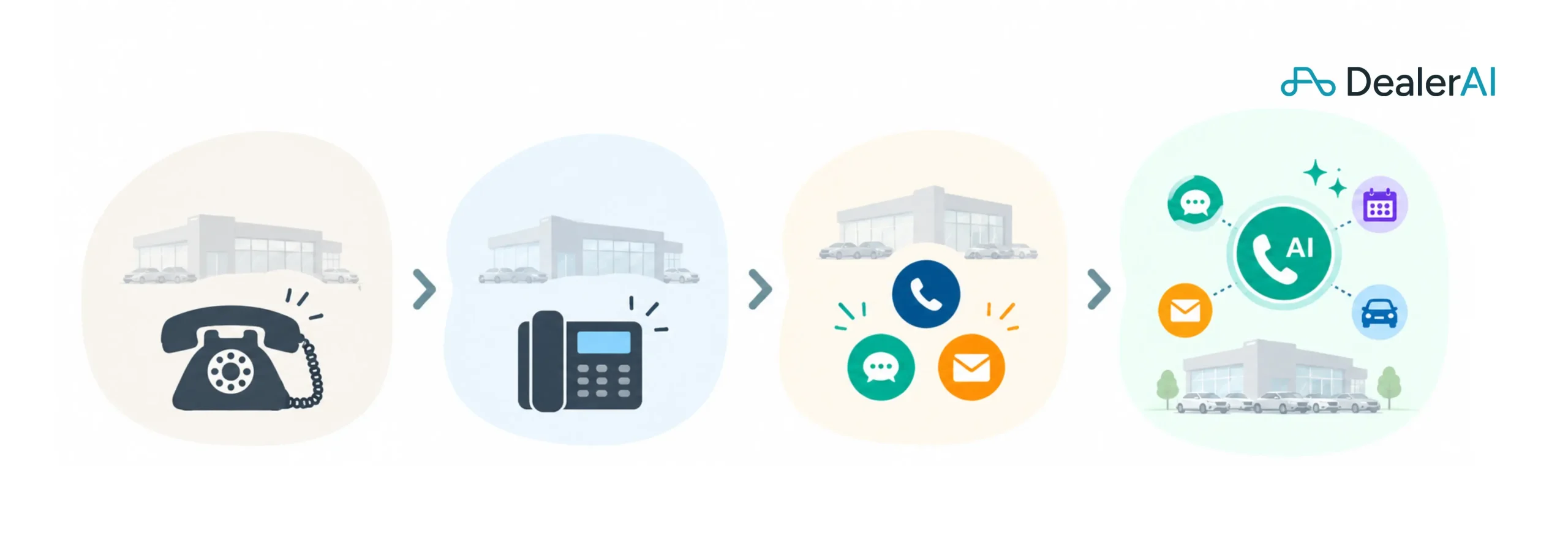
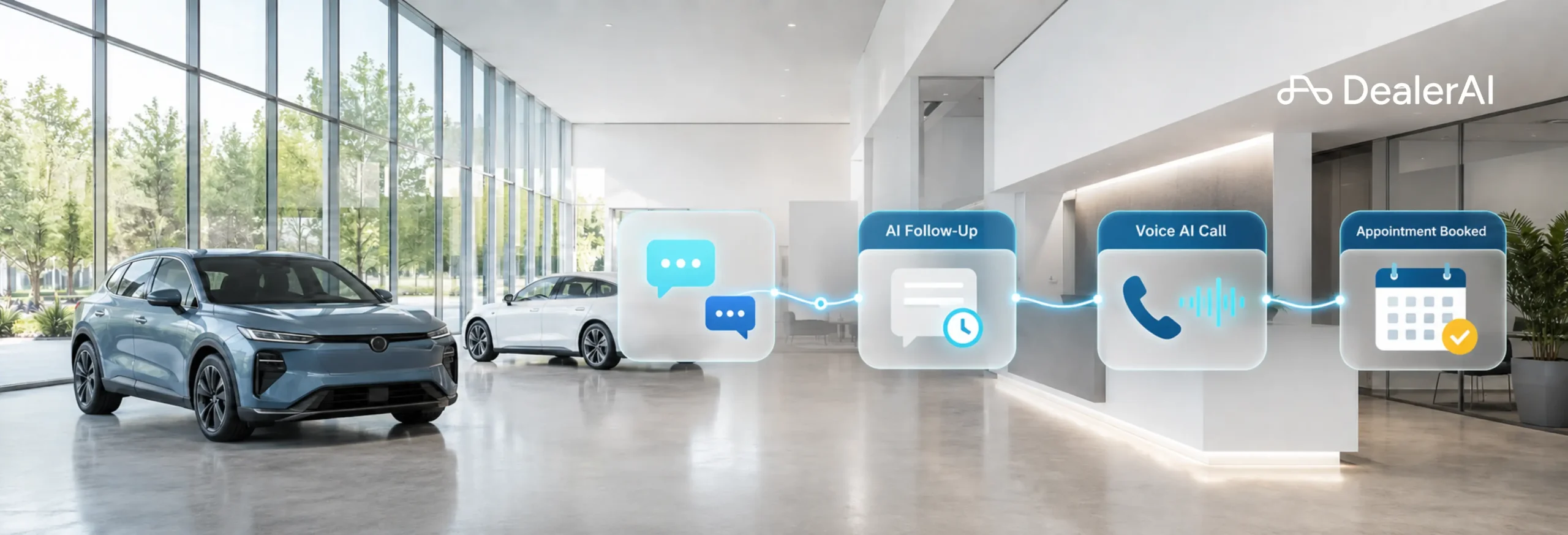
A capable system keeps the conversation going across web chat, SMS, email, and phone. It responds to new inquiries, nurtures undecided shoppers, sends service reminders, reconnects with older leads, and pulls dealership staff into the conversation the moment a human touch is needed.
For dealership leadership, the goal isn’t complicated: make follow-up consistent without tearing out the people and processes that already work.
Quick Answer: What Is an AI Follow-Up System for a Car Dealership?
An AI follow-up system helps a dealership respond to customers and stay in touch with them over time.
Unlike a basic CRM task or a scheduled template blast, a well-built system uses information about the customer, the vehicle, the store, and the prior conversation to figure out what should happen next.
It can be used to:
- Respond to new internet leads
- Handle ongoing automotive sales follow-up
- Send dealership service reminders
- Re-engage older CRM contacts
- Recover missed appointments and no-shows
- Notify customers about price drops or matching inventory
- Answer and route phone calls
- Book appointments or loop in staff
- Stop or redirect a sequence the moment the customer replies
It should work alongside your CRM, BDC, sales floor, and service department, not force you to rebuild your process around it.
Why Dealership Follow-Up Breaks Down
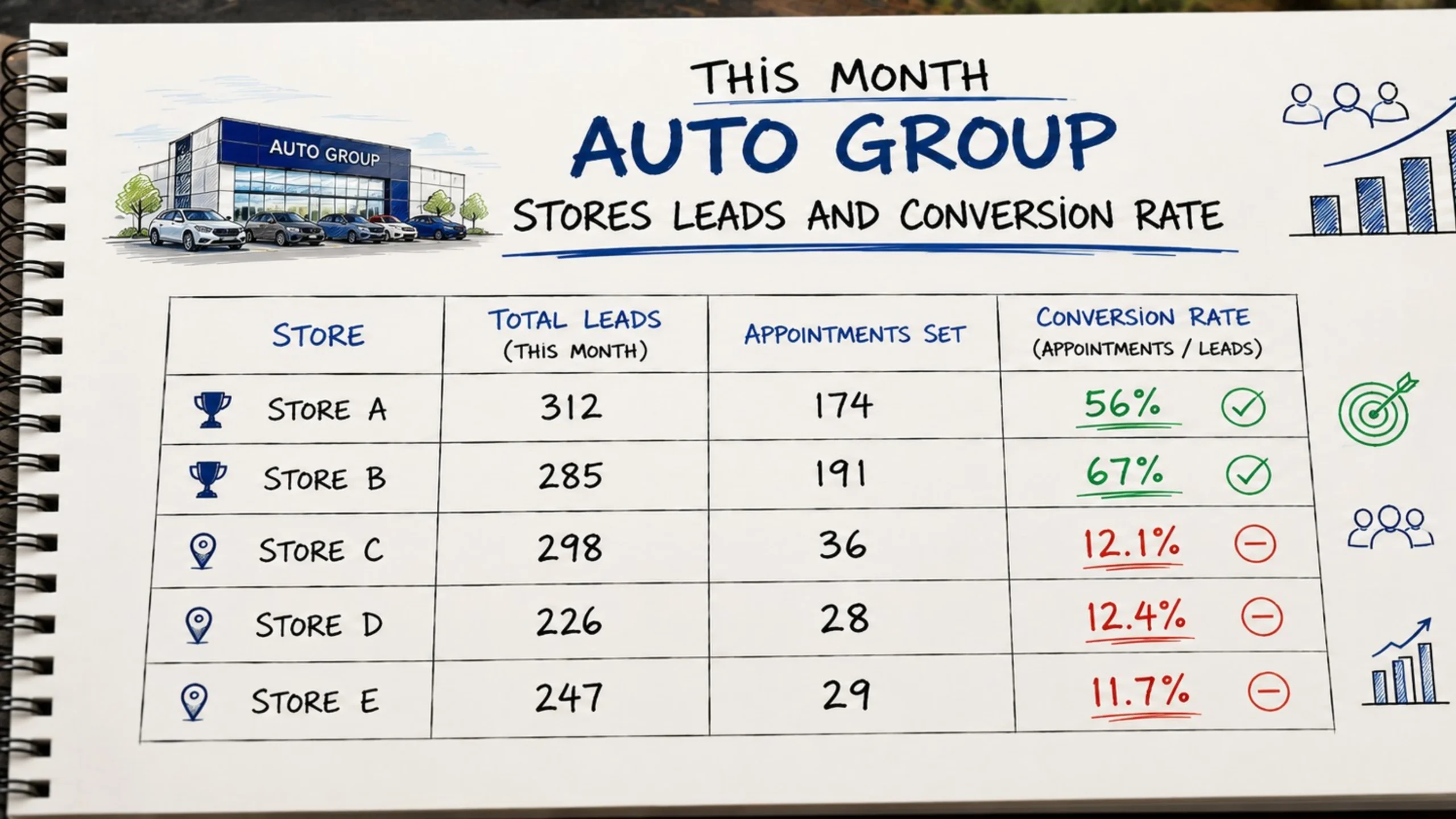
Most stores already understand the value of staying in touch. The problem is keeping that consistent when lead volume, staffing, and customer behavior shift throughout the week.
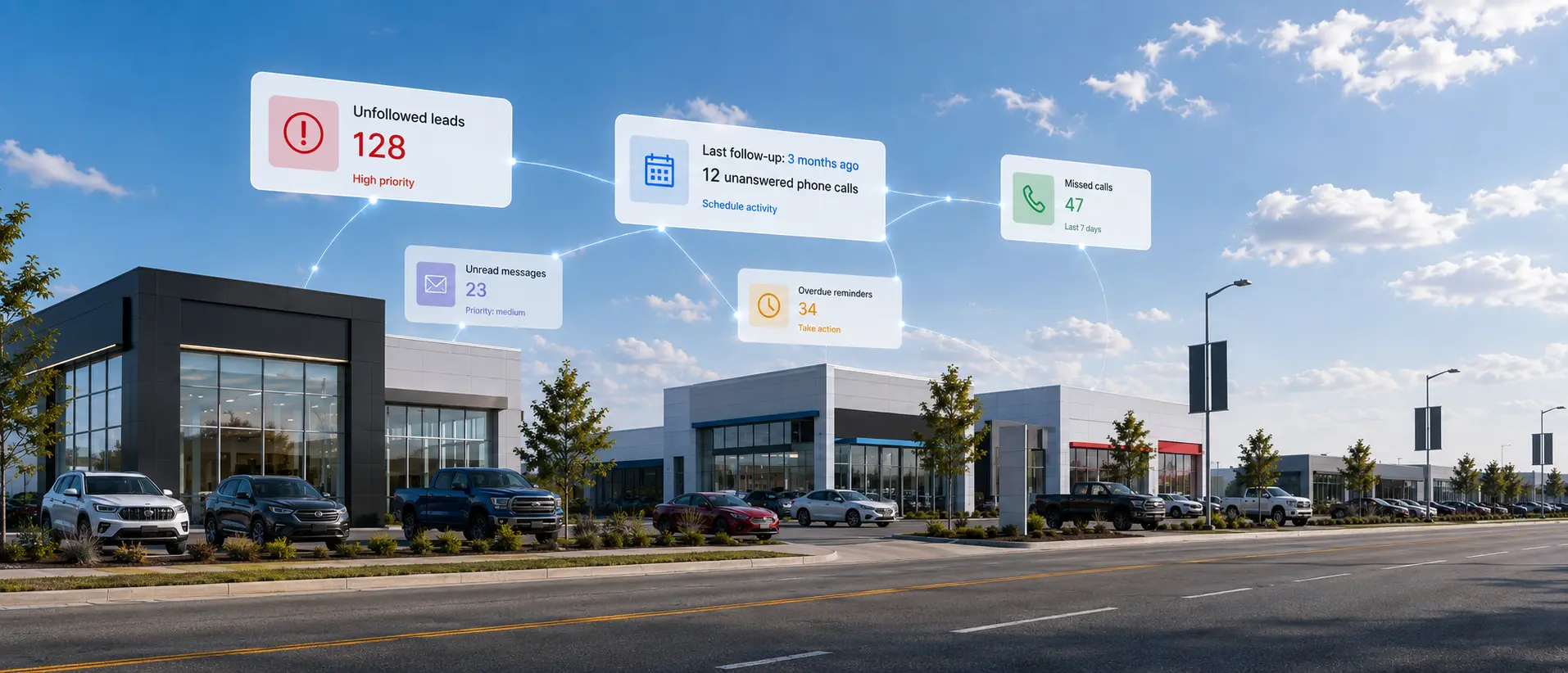
A shopper submits an inquiry at 9 PM. Another texts back while the assigned rep is closing a deal on the floor. An old prospect gets interested again after a price change, but nobody’s tracking that moment. The CRM generates a task for all three. Tasks alone don’t finish the conversation.
Common breakdowns look like this:
- Slow responses after hours or on weekends
- Inconsistent follow-up standards between reps
- Generic messages that give the customer no reason to respond
- Sequences that keep firing after the customer already replied
- Older leads getting little to no attention
- Missed calls landing in voicemail
- Customer history scattered across three different systems
- Managers with no real visibility into what’s actually being said
None of this points to a team that doesn’t care. It’s what happens when people are asked to remember and complete dozens of repetitive touches while also handling the customer standing in front of them. Customer engagement automation adds a layer of coverage for exactly those moments, when the store is slammed or closed.
AI Follow-Up vs. CRM Automation: What’s the Difference?
CRM automation and AI follow-up sound similar but do different jobs.
| CRM Automation | AI Follow-Up |
|---|---|
| Creates tasks and reminders | Actually carries out the conversation |
| Sends scheduled templates | Adapts the message to the customer’s situation |
| Runs on a fixed cadence | Adjusts based on replies or new events |
| Logs lead activity | Holds a two-way conversation |
| Alerts staff to take action | Responds, qualifies, routes, and books |
| Tracks one lead record at a time | Coordinates across several channels at once |
Your CRM should stay the system of record. AI follow-up sits alongside it and handles the communication work that CRM tasks generate but rarely complete on their own.
Before signing with a vendor, confirm exactly what data moves between the AI platform and your CRM. Integration depth varies a lot by vendor, CRM, DMS, and how your store is configured.
Where Can a Dealership Actually Use AI Follow-Up?
The right starting point depends on where you’re currently bleeding time or losing customer attention.
New Internet Leads
A shopper submits a website or third-party lead in the evening.
The system can respond, confirm the vehicle they’re asking about, answer basic questions, and keep the conversation moving. If they want to come in, it collects the details needed and either books the appointment or routes the opportunity to your team.
That shrinks the gap between the original inquiry and a useful reply, which is often the difference between a booked appointment and a shopper who’s already talking to your competitor down the road.
Long-Term Lead Nurturing
Plenty of customers aren’t ready to book after one exchange.
Some are still comparing vehicles. Others are waiting on a trade valuation, financing details, a price drop, or simply the right time to buy. Lead nurturing for dealerships means giving those customers an actual reason to come back to the conversation, referencing the vehicle they liked, a comparable alternative, an active incentive, or new inventory that fits what they asked for.
The system also has to recognize when the customer replies and change course. A rigid sequence that keeps sending the same messages after someone’s already responded creates extra cleanup for your team and a lousy experience for the customer.
Older CRM Lead Re-Engagement
Most dealership CRMs are sitting on thousands of contacts who showed interest and never bought.
AI follow-up can help management reopen those conversations with the right segment instead of blasting the whole database. That might mean grouping by model interest, past trade-in inquiries, previous showroom visits, or how long the lead’s been sitting untouched.
Targeting is what makes this work. A smaller, well-aimed campaign tied to a real reason for reaching out will usually beat a broad message with no connection to why the customer talked to you in the first place.
DealerAI Reach handles this kind of personalized follow-up through SMS and email. It responds when the customer replies, adjusts the next message accordingly, and routes anyone who shows interest back to the right store or team member.
As an example, Volvo Cars Markham used DealerAI Reach to contact roughly 1,500 older CRM leads over a one-week campaign. About 225 customers replied, and that outreach contributed to six additional vehicle sales.
Price Drop and Inventory Updates
A price change or new inventory arrival is a natural reason to restart a conversation.
Rather than waiting for someone to manually comb through old leads, an event-triggered workflow can identify customers who previously showed interest in that vehicle or something close to it.
The message ties back to something that actually changed, which lands a lot better than a routine “still interested?” email with nothing behind it.
For auto groups, that matching can extend across rooftops. If Store A doesn’t have the right unit anymore, the system can help surface a matching vehicle at Store B, depending on your platform and group setup.
Appointment Confirmation and No-Show Recovery
Booking the appointment doesn’t guarantee the customer shows up.
AI follow-up can confirm the time, answer last-minute questions, and give directions or instructions ahead of the visit. If they don’t show, a recovery sequence offers an easy way to reschedule instead of just letting the lead go cold.
Management should be able to tell the difference between a customer who expressed interest in visiting and one who has a confirmed appointment ready to hit the calendar.
Dealership Service Reminders
Service reminders can be built around mileage, elapsed time, maintenance schedules, seasonal needs, open recalls, or repair history, depending on what data you have available.
A good reminder does more than tell the customer service is due. It helps them take the next step, answering questions, identifying what the vehicle actually needs, and connecting them to booking.
The system also has to respect service capacity, dealership scheduling rules, and whatever the DMS or booking platform can support. This is another area where DealerAI Reach does the heavy lifting, keeping the SMS and email side moving without relying on someone remembering to send it.
Missed and After-Hours Calls
Phone coverage is the other piece dealerships tend to overlook.
A customer calls during lunch, after hours, or while your sales and service lines are already tied up. When that call hits voicemail, there’s a real chance you lose the opportunity before anyone gets a chance to call back.
DealerAI Voice answers inbound calls, figures out why the customer’s calling, handles common questions, collects lead information, supports appointment requests, and routes the call to the right department.
Anything that needs judgment, negotiation, or detailed advice gets handed to your team, with the customer’s context already attached, so nobody has to start the conversation over.
That gives your store extra phone coverage during evenings, weekends, lunch rushes, and other high-volume stretches, without changing what your people handle day to day.
What Should You Look for in an AI Follow-Up System?
You can’t judge one of these platforms off a polished demo. You need to understand how it behaves during a normal week at your store.
It should sound like your best rep, not a script
Customers pick up on a canned message within one exchange. Look for responses that read like a strong BDC rep wrote them, not a template stitched together from a form field. If the demo message sounds stiff, your customers will notice too.
It needs to know your inventory and your process
A generic AI tool that doesn’t pull live inventory is close to useless in this business. It needs to reference actual vehicles on your lot, current pricing, and your specific trade-in or financing process. Otherwise you’ve just added one more disconnected tool to the stack.
Staff need to be able to jump in instantly
This one’s non-negotiable. Your sales and service teams need to step into any conversation the second it gets complicated or the customer asks for a real person. The handoff should carry the customer’s full history and context, so nothing gets repeated and nothing gets dropped.
It has to work across channels
A lead doesn’t stay in one lane. They start on web chat, want a text next, then expect a phone call. Look for a system covering web chat, SMS, email, and phone together, rather than three separate vendors that don’t talk to each other.
It needs clear stop and escalation rules
Follow-up shouldn’t run blind. The system needs defined rules for pausing, stopping, escalating, and rerouting, covering things like an opt-out request, a confirmed appointment, a vehicle that’s no longer available, or a question that clearly needs a human. Ask directly what happens if the AI gets something wrong and who’s accountable when it does. A serious vendor has a real answer here, not a “trust the algorithm” shrug.
Auto groups need store-level control
Every rooftop runs a little differently: different brands, hours, appointment rules, escalation paths, and compliance requirements. Group leadership should be able to set common standards while still allowing approved store-level rules underneath them.
You should see the ROI in your own numbers
A credible partner can show you response times, reply rates, appointments booked, and recovered deals using your store’s own data, not just industry-wide claims. If they can’t tie results to your CRM numbers, that’s worth a second look.
How to Test AI Follow-Up Without Betting the Store on It
You don’t need to automate every department and channel on day one. A controlled pilot is the safer way to see what this actually does before you scale it.
- Pick one clear use case. After-hours internet leads, aged lead re-engagement, appointment confirmations, no-show recovery, missed calls, or one category of service reminders. Don’t stack five processes into the first test.
- Record your current baseline. Measure today’s response time, contact rate, reply rate, and appointment rate for that use case before you turn anything on. Without a baseline, you have no way to know if the system actually moved the needle.
- Define the rules up front. Document what the AI can answer, when it stops, where leads route, and which questions always go to a human. Bring in the managers and reps who currently handle these conversations. They know the process better than anyone.
- Review real conversations. Don’t just check spelling and tone. Confirm the system understood the customer, used accurate information, followed your actual process, and picked the right next step.
- Compare outcomes to the baseline. After an agreed test window, measure the pilot against where you started. The decision should come down to results in your store, not the feature list from the sales deck.
Answering the Objections Your Team Will Raise
“We already have a CRM that handles follow-up.” Most CRMs schedule the task. They don’t actually hold the conversation. AI follow-up handles the real back-and-forth with the customer, then logs everything back into your CRM so your existing process stays intact.
“Our customers want a human, and so does our team.” So does a well-built AI follow-up system. It’s there to support your people, not replace them. Done right, it frees your team to focus on customers who are ready to buy, while it handles the early-stage back-and-forth and hands off anyone warm.
“What if it tells a customer something wrong?” This is the right question, and it’s exactly why the escalation rules and human takeover matter more than any feature on a spec sheet. A well-built system trains on your inventory, your policies, and your voice, with real guardrails in place, not a black box guessing at answers.
“Is switching worth the risk?” Fair concern, especially if your current setup is “good enough” and your job’s on the line if something breaks. The way to de-risk it is a pilot on one channel, like after-hours web chat or service reminders, measured against what you’re doing today before you roll it out any further.
What Results Should You Actually Expect?
AI follow-up is an operating tool, not a shortcut to guaranteed sales. Results depend on lead quality, inventory, pricing, how well your team handles the handoff, market conditions, and the strategy behind the follow-up itself.
Reasonable things to track:
- Faster first responses
- More leads getting complete follow-up instead of falling off after one touch
- Higher reply rates from customers
- More conversations recovered from older, dormant leads
- Fewer missed calls turning into voicemail
- More appointment opportunities
- Less repetitive manual outreach eating into your team’s day
- Better visibility across stores for group leadership
A vendor worth working with will measure these results against your own store’s numbers, not industry benchmarks pulled from somewhere else.
Frequently Asked Questions
Does AI follow-up replace the dealership’s CRM? No. The CRM stays the central customer and lead record. AI follow-up works alongside it to carry out conversations, update information, route opportunities, and close out actions that would otherwise sit as open tasks.
Does AI follow-up replace the BDC or sales team? It doesn’t need to. Most dealerships use it to cover repetitive communication, after-hours inquiries, and longer nurture sequences, while staff stay responsible for anything that needs judgment, negotiation, or a real relationship.
Can AI follow-up work across both sales and service? Yes, as long as the platform supports separate workflows, data sources, and routing rules for each. Sales and service shouldn’t run through one generic process. Each department needs its own information and its own handoff rules.
Can an auto group set different rules for each store? It should. A solid group platform supports both group-wide standards and rooftop-specific rules. Confirm how inventory, branding, routing, reporting, permissions, and customer data are managed across locations before you sign anything.
How long should a follow-up sequence run? There’s no fixed answer. Timing should reflect the lead type, how the customer’s responding, vehicle availability, and your own dealership policy. More messages don’t automatically mean better results. Every touch needs a real purpose behind it.
What happens when a customer asks for a real person? The system should hand off immediately, or create a clear task for the right employee, with the full conversation history and context attached so the customer never has to start over.
A More Consistent Follow-Up Process
AI follow-up isn’t about pulling people out of your sales floor or your service drive. Its value is in covering the gaps between the conversations your team is already having.
New leads get a response after hours. Older prospects hear from the store again when there’s an actual reason to reach out. Service customers get a timely reminder instead of a postcard nobody reads. Phone calls get answered instead of dumped into voicemail.
Your team steps in exactly where experience and judgment matter most.
The right system should fit your process, respect your rules, plug into the tools you already run, and give management a clear view of what’s actually happening in every conversation.
DealerAI helps North American dealerships and auto groups manage customer communication through AI-powered web chat, DealerAI Reach for SMS and email follow-up, and DealerAI Voice for phone automation, all connected to the signals that matter: new leads, price changes, no-shows, and service needs.
See DealerAI in action or calculate the potential return for your dealership.