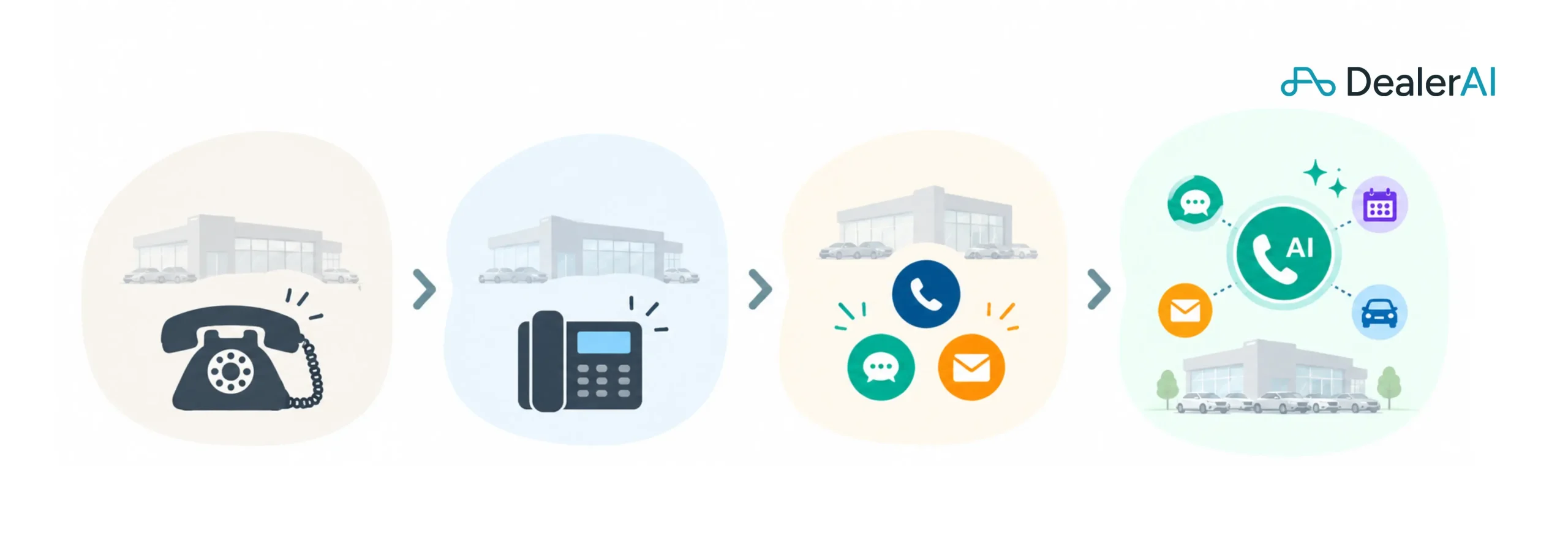
For many dealerships, phone automation still brings to mind a familiar experience: listen to a menu, press a number for the right department and wait for someone to become available.
That model automated routing. It did not automate much of the actual conversation.
Modern dealership phone automation works differently. Conversational AI can understand why a customer is calling, maintain context as the discussion changes, retrieve information from connected dealership systems and complete defined actions during the call.
It can also work in the other direction. Instead of waiting for customers to call the dealership, AI phone calls can support outbound follow-up with internet leads, missed appointments, older CRM opportunities and other customers who need to be contacted.
The result is a broader operating model that connects phone conversations with the dealership’s existing sales, service and follow-up processes.
Start With Two Types of Calls
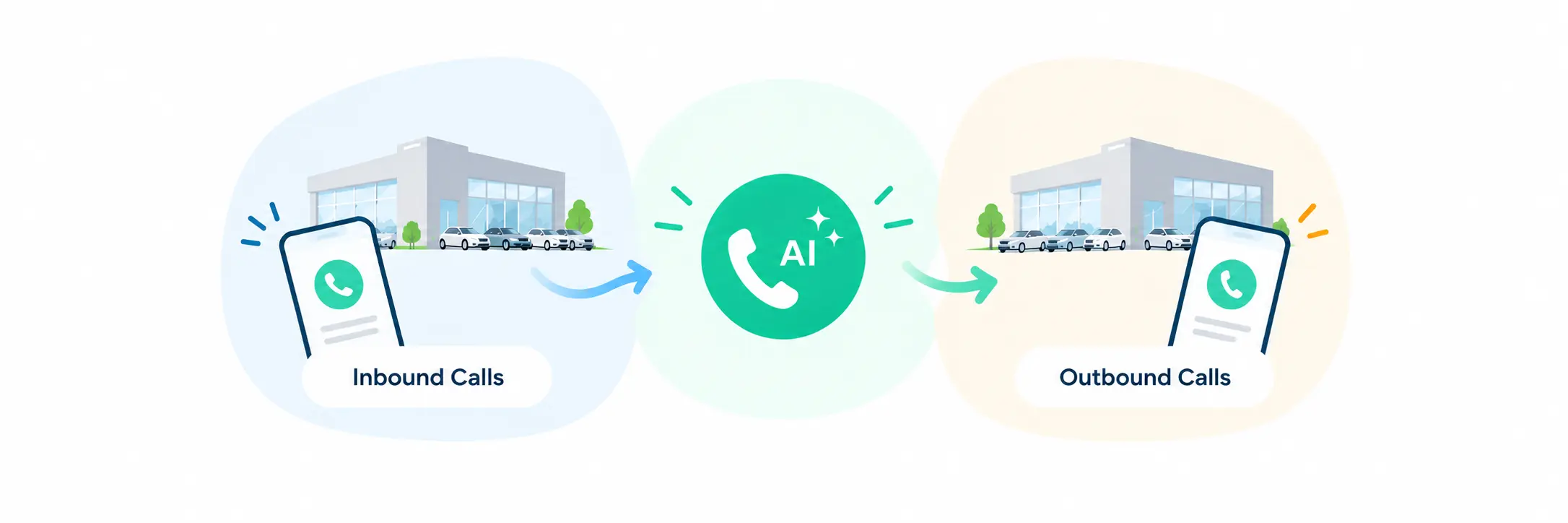
Most dealership phone activity can be viewed in two categories: inbound and outbound.
Inbound calls begin with the customer. Someone may want to check vehicle availability, schedule service, reach a salesperson, ask about a part or follow up on an existing transaction.
Outbound calls begin with the dealership. A BDC or sales team may be following up with a new internet lead, reconnecting with an older CRM opportunity, recovering a missed appointment or working through a campaign list.
Traditional phone operations rely heavily on employee availability for both. AI creates an opportunity to automate appropriate parts of each workflow while keeping dealership staff available for conversations that require their expertise.
How an Inbound AI Call Works
Consider a customer who calls after seeing a vehicle online.
Rather than starting with a long menu, an AI phone system can identify the reason for the call from the conversation itself. If the customer asks whether a particular model is available, the system can check connected inventory information rather than simply transferring the call to sales.
The conversation may then move in another direction. The customer might compare trims, mention a trade-in and ask about visiting the store on Saturday. A conversational system can retain those details as the discussion develops instead of treating each question as a separate request.
DealerAI Voice is designed to connect phone conversations with dealership information. Depending on the available integrations, it can access inventory, CRM, DMS and service information while the customer is still on the call. It can also capture context for the next step in the process.
The important change is that automation can now happen within the conversation, rather than simply routing the customer before the conversation begins.
Service Calls Are a Natural Starting Point
Service departments are a good example because the phone remains an important scheduling channel.
CDK reports that 61% of dealership customers still book service appointments by phone. That creates significant demand for service advisors and appointment teams, particularly when several customers call during the same period. (Source: CDK Global)
Many of those conversations follow recognizable workflows. A customer may want to book maintenance, change an appointment, ask about dealership hours or confirm basic service information.
AI phone automation can support those routine conversations while allowing advisors to spend more of their time on customers who need technical knowledge, recommendations or assistance with a more complicated issue.
The objective is not to automate every service conversation. It is to determine which calls can move forward without requiring an advisor from the beginning.
Outbound Automation Works Differently
Inbound phone automation gets most of the attention because it is easy to understand: the customer calls and AI answers.
Outbound automation can be just as important.
BDC and sales teams work through a wide range of follow-up every day. New internet leads compete with older opportunities, unsold prospects, no-shows and customers who require another contact attempt.
Traditional outbound calling is highly dependent on employee time. Even an unanswered call requires someone to dial, wait and record the outcome before moving to the next customer.
AI allows appropriate outreach to become part of an automated sequence.
DealerAI Reach can coordinate voice, SMS and email follow-up around the same customer journey. For example, an internet lead could receive a text, a later email and then a phone call based on the sequence configured by the dealership. DealerAI‘s All-in-One offering supports Voice for both inbound and outbound use cases, alongside outbound campaign and CRM integrations. This changes outbound automation from simply making more calls to creating a more structured follow-up process.
One Customer, Several Channels
Customers do not necessarily stay on one communication channel.
Someone may submit a website inquiry, answer a text later that day and speak by phone before visiting the dealership. Treating those interactions as unrelated conversations makes it harder to maintain continuity.
A better approach connects them.
For example:
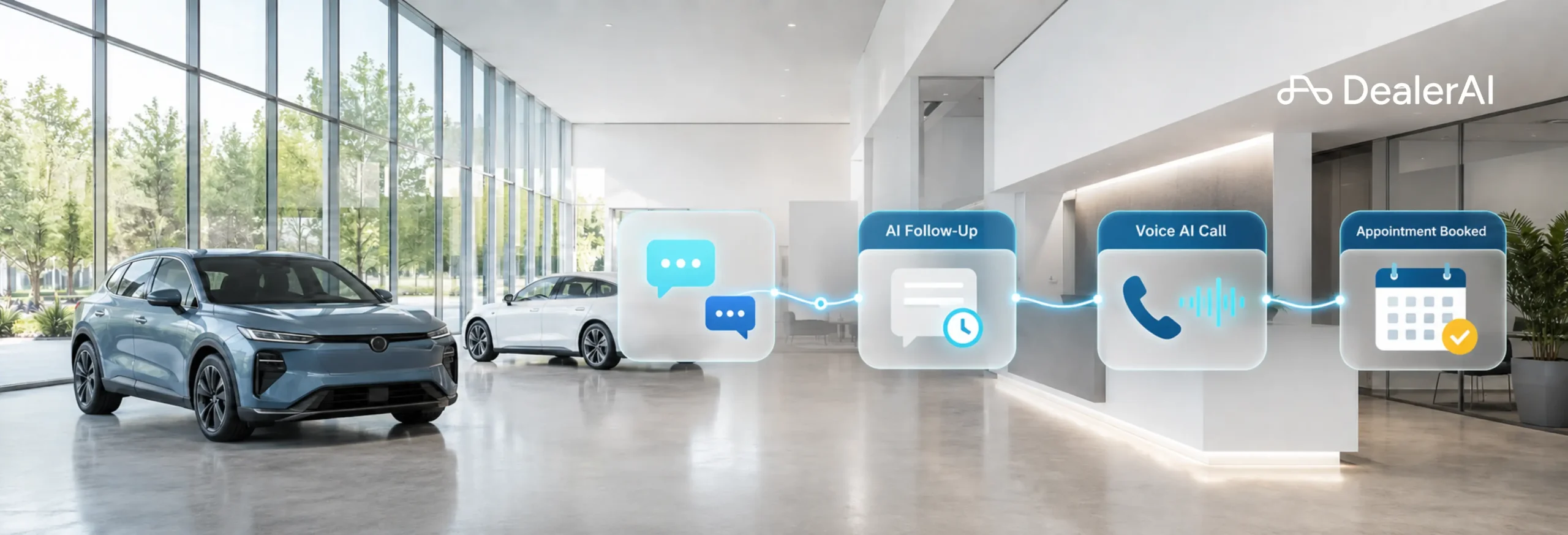
Internet inquiry → SMS → Email → Voice call → Appointment → Employee follow-up
The phone call becomes one step in the customer journey rather than an isolated activity.
DealerAI Reach is designed around this type of multichannel follow-up, using voice, SMS and email sequences to keep customer outreach connected. For dealership management, that also makes follow-up easier to standardize. The process does not have to depend entirely on an individual remembering when another call should be made.
Good Automation Needs Dealership Context
A natural-sounding voice is useful, but sounding human is not enough.
The phone system needs access to relevant dealership information.
A customer asking about a RAV4 needs information about actual inventory. Someone scheduling service may need available appointment times. An existing customer should not necessarily receive the same conversation as a first-time caller.
DealerAI Voice can work with live inventory, customer records, service information and dealership systems where the appropriate integrations are configured. It can also write relevant information back into connected systems instead of leaving the next employee to reconstruct the conversation manually. This is what separates a basic automated phone response from a more useful dealership workflow. The goal is not simply to answer the customer. It is to move the conversation toward the next appropriate action.
Multilingual Calls Can Follow the Same Workflow
Language coverage is another area where phone automation can extend an existing dealership operation.
The language needs of a store in Toronto may be very different from those of a rooftop in Florida, Quebec or Vancouver. Providing consistent coverage across every shift can become increasingly difficult for larger auto groups.
DealerAI Voice supports more than 30 languages and can detect language changes during a conversation. That means the workflow does not need to change simply because the customer chooses another supported language. The same inventory questions, appointment requests and qualification process can continue. For an auto group, this provides a common technology platform while allowing individual stores to serve the language needs of their local market.
Know When a Person Should Take Over
Good phone automation also needs to know its limits.
A customer negotiating a vehicle purchase, escalating a complaint, discussing an unusual service problem or requesting a specific employee may need a person to become involved. That makes the handoff part of the workflow, not an afterthought. Ideally, the system should identify when a human is required, send the conversation to the appropriate department and pass along the context already collected. The customer should not have to start from the beginning. This matters because the transfer itself can become a weak point. Pied Piper’s 2026 dealership service research found that roughly one in three attempted AI-to-human transfers failed through voicemail, disconnection or extended hold. (Source: Pied Piper PSI)
A good AI conversation followed by a poor transfer is still a poor customer experience.
For dealership leaders evaluating phone automation, the question should therefore be broader than “How good does the AI sound?”
They should also ask: What happens when the AI needs our team?
What Dealership Phone Automation Can Handle
The right workflows will vary by dealership, but practical use cases can include:
| Workflow | How automation can help |
|---|---|
| Vehicle inquiry | Check inventory, capture interest and support an appointment |
| Service scheduling | Handle routine questions and appointment workflows |
| After-hours call | Continue serving customers when regular staff are unavailable |
| BDC overflow | Add capacity when multiple calls arrive together |
| New internet lead | Support timely qualification and follow-up |
| Older CRM lead | Re-engage customers through a defined campaign |
| Missed appointment | Restart the conversation and support rebooking |
| Multilingual inquiry | Continue in a supported customer language |
| Human handoff | Route the conversation with customer context |
Not every dealership needs all of these at once.
A busy service operation might begin with scheduling and overflow. A high-volume sales store could focus on inventory inquiries and lead qualification. An auto group with a large CRM database may see more value in outbound re-engagement. The workflow should determine the use of AI, rather than introducing AI first and looking for somewhere to put it.
Build Around the Process
It is easy to judge an AI phone product by listening to a demo.
Does the voice sound natural? Does it answer quickly? Can it handle interruptions?
Those details matter, but dealership operators should go further. Before automating a workflow, define what the system needs to know, what actions it is allowed to take and where its responsibility ends. For an inbound sales call, that may include inventory access, qualification questions, appointment availability and a clear route to the sales team. For an outbound campaign, it may include the audience, timing, communication sequence, objective and what should happen when the customer responds. For service, the requirements may be completely different.
Strong phone automation therefore depends as much on workflow design as it does on the voice technology itself.
Measure Inbound and Outbound Differently
Inbound and outbound phone automation also require different measures of success.
For inbound activity, management may want to track:
- answer rate
- abandoned calls
- hold time
- after-hours conversations
- appointments booked
- successful transfers
For outbound activity, useful measures can include:
- customers contacted
- response or contact rate
- follow-up coverage
- qualified conversations
- appointments created
- re-engaged CRM opportunities
Employee time is worth measuring as well. If routine conversations can be handled automatically, management can evaluate whether BDC representatives, salespeople and service advisors are able to spend more time on opportunities that require their direct involvement. The objective should not be to maximize automated call volume. It should be to improve the effectiveness of the overall dealership communication process.
Start With One Workflow
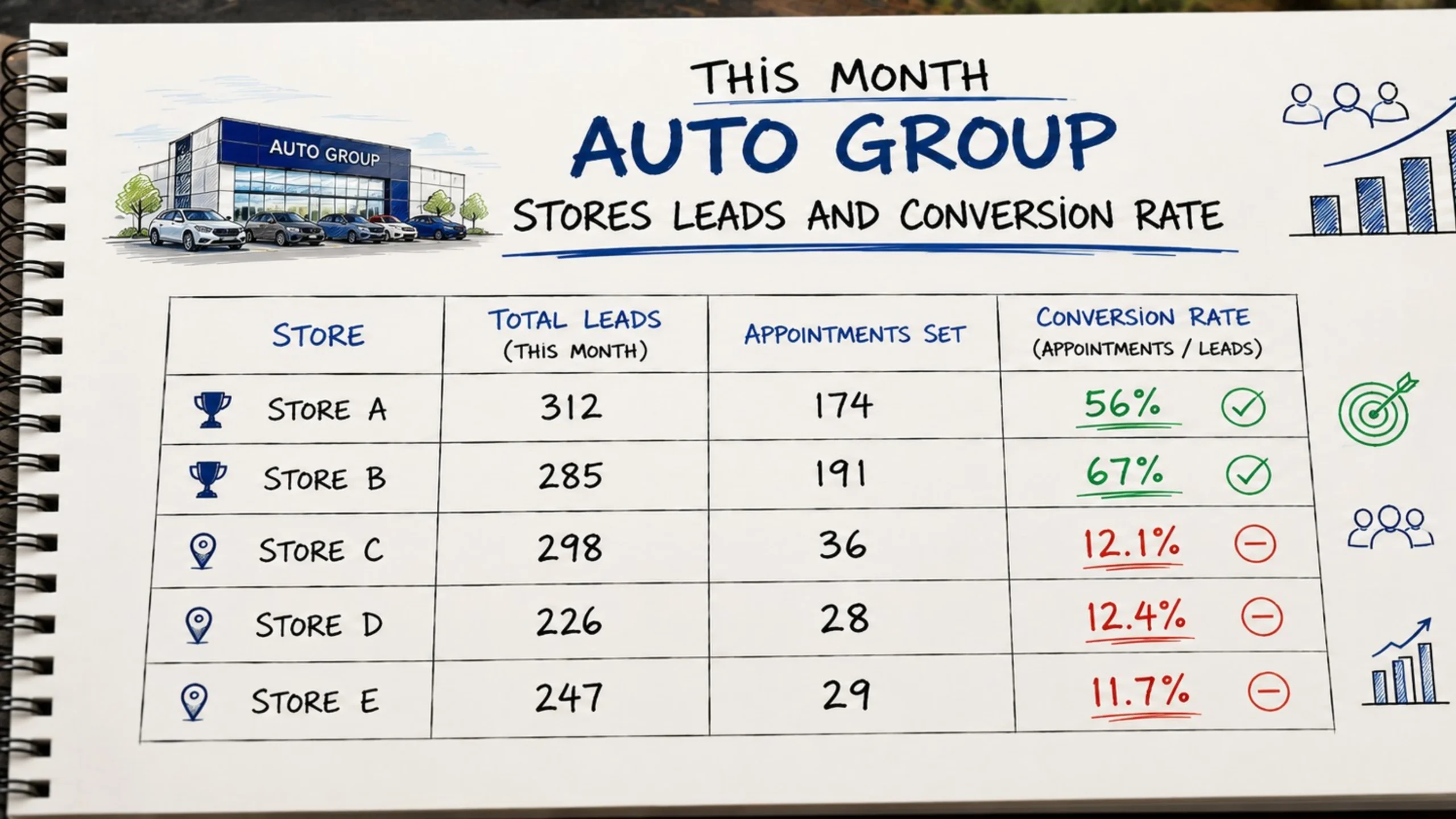
A dealership does not need to automate its entire phone operation at once. A more practical starting point is one clearly defined pressure area. That could be service overflow during peak hours, after-hours sales inquiries, multilingual coverage or an older CRM follow-up campaign. Establish how the current process performs first. Then compare the automated workflow against that baseline. Once the dealership understands what works, it can expand to additional use cases. For an auto group, that approach also makes it easier to test at one or two rooftops before creating a broader group standard.
From Phone System to Communication System
Dealership phone automation is moving beyond the traditional idea of answering and routing calls.
Inbound AI can help customers find information and complete appropriate tasks without unnecessary waiting. Outbound AI can extend follow-up beyond the number of calls an individual employee can make in a day. When voice connects with CRM, DMS, inventory, SMS and email workflows, the larger opportunity becomes clearer. The phone stops operating as an isolated channel and becomes part of a connected customer communication system.
For dealership leaders interested in the broader business case behind that shift, read A New Model for Dealership Phone Operations.
Try a DealerAI Voice Call
The easiest way to understand modern AI phone automation is to experience it as a customer.
Call 289-277-8899 and speak with Sarah, DealerAI’s demo AI agent.
Ask about a vehicle. Change the subject. Ask a follow-up question or move into an appointment request. It provides a practical look at how DealerAI Voice handles a live dealership conversation.
FAQ Section
What is dealership phone automation?
Dealership phone automation uses technology to manage parts of inbound and outbound phone workflows. Modern conversational AI can understand customer intent, retrieve relevant information, complete defined actions and involve dealership employees when necessary.
Can AI handle both inbound and outbound dealership calls?
Yes. AI can support inbound conversations such as vehicle inquiries, service requests and after-hours calls. It can also support outbound workflows such as lead follow-up, appointment recovery and CRM re-engagement. DealerAI’s current Voice offering supports both inbound and outbound use cases.
Can AI phone automation connect to dealership inventory?
Yes, when supported by the platform and configured integrations. DealerAI Voice supports live inventory lookup along with CRM, DMS and service-related actions.
Can voice calls be part of a dealership follow-up sequence?
Yes. DealerAI Reach can combine voice, SMS and email into coordinated outreach sequences so that phone calls become part of a larger follow-up workflow.
Does dealership phone automation replace the BDC?
It does not need to. AI can handle appropriate routine conversations, overflow and repeated follow-up while BDC representatives focus on opportunities that require selling skills, judgement or personal attention.
Should every dealership call be automated?
No. Complex sales discussions, escalations, unusual service issues and other situations requiring judgement should have a clear path to the appropriate dealership employee.
What should dealerships measure when using AI phone automation?
Useful measures include answer rate, abandoned calls, contact rate, appointments, transfer success, qualified conversations and employee time spent on routine phone work. Inbound and outbound workflows should be measured separately because they serve different purposes. coverage and follow-up across rooftops while allowing each dealership to retain its local staff, inventory, languages and operating processes.